

Continent of Criminals: How Hollywood Shaped a Latinophobic Imagination
Beyond the headlines, the flicker of the screen provides the scaffolding for mass deportation.

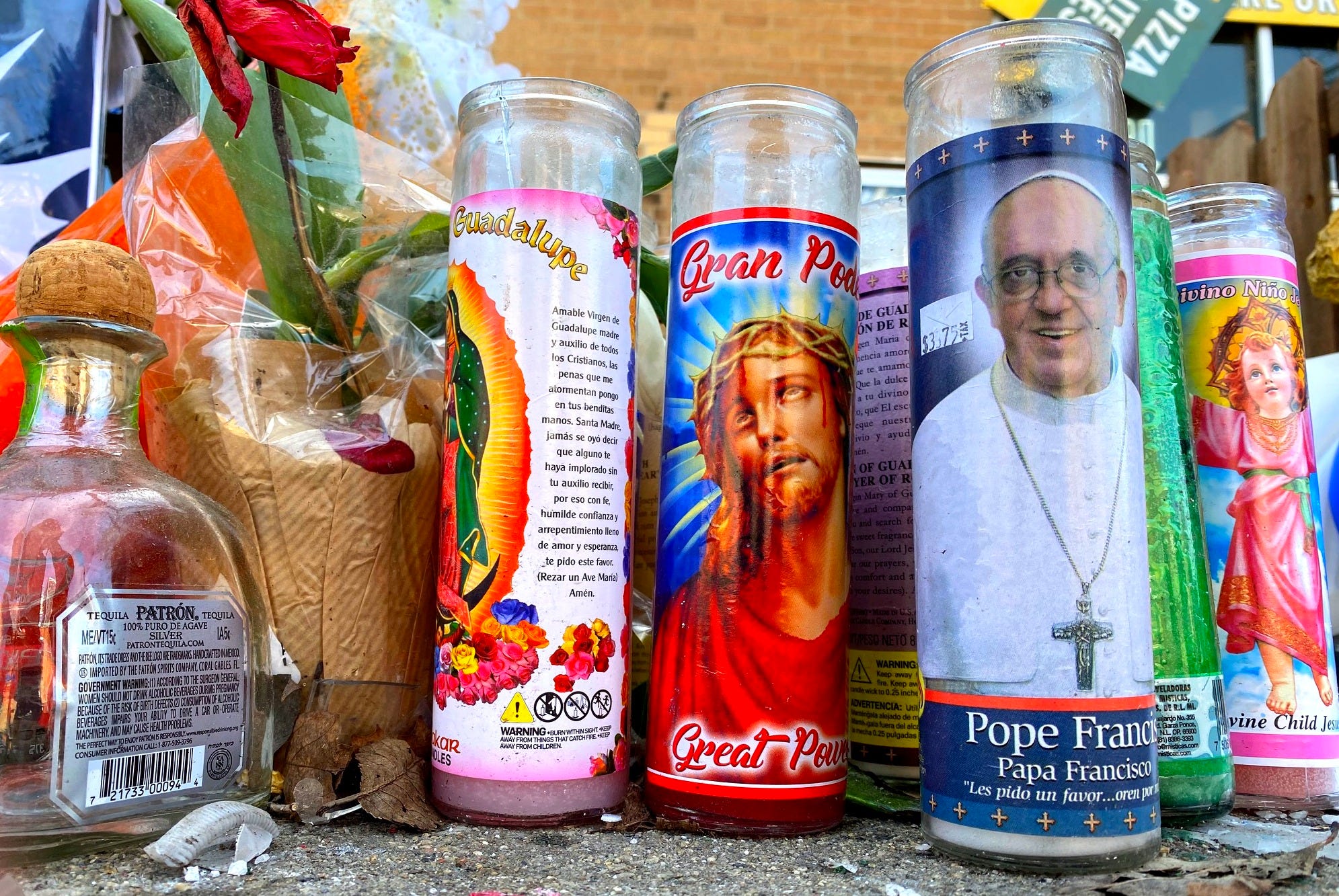
Beyond the headlines of border crises lies a century-long cinematic project. By tracing the evolution from the “greaser” of the silent era to the “sicario” of the modern procedural, we find that Hollywood didn’t just reflect American fear, it provided the aesthetic justification for the erosion of democratic due process.
The American living room has long served as a secondary border, more fortified and psychologically indelible than any physical wall in the Sonoran Desert. For more than a hundred years, the flickering light of the screen has delivered a specific, calculated anxiety: the conviction that a Latin American presence is inherently synonymous with the breakdown of civic order. When prime-time procedurals frame the Mexican antagonist as a uniquely visceral, chaotic threat, they are not merely chasing ratings. They are participating in a project of narrative containment that predates the modern immigration debate by generations, turning the “Latino criminal” into a permanent fixture of the American moral landscape.
A template cast in the silent era.
As early as 1908, films such as The Greaser’s Gauntlet and The Greaser’s Revenge—and, soon after, Tony the Greaser—established a visual shorthand for Mexican identity defined by treachery, cowardice, and a hygiene-based moral failing. These were not marginal genre exercises; they were mainstream entertainment, shaping a vocabulary that audiences absorbed as fact. The Mexican government formally protested. In 1922 a threatened boycott prompted a brief, cosmetic industry adjustment. The archetype hardly vanished, it migrated: greaser to bandito, bandito to gang member, gang member to cartel operative. Each iteration updated the costume while preserving the underlying logic. The Latino man as an agent of violence whose presence in the American space requires management, surveillance, and containment.
Hollywood did not exactly invent American Latinophobia. But it did give it a face, wardrobe, and prime-time slot. A 2019 UCLA Hollywood Diversity Report found Latino characters made up roughly five percent of speaking roles across film and television, even as Latinos constituted nearly nineteen percent of the U.S. population. Of those characters, a disproportionate share appeared in crime dramas—almost always as perpetrators. The pattern persists. A 2026 study of the 2024–25 broadcast season revealed Latinos still hold only about six percent of roles in top scripted shows—yet one in four Latino characters is depicted as a career criminal. The same logic courses through West Side Story, Training Day, The Shield, Southland, and Netflix’s Narcos franchise, which turned the premise that Latin American society is essentially organized around cocaine into an entire content vertical.
The procedural drama refined the tactic
In The Closer (2005–2012), Kyra Sedgwick’s cooky Brenda Leigh Johnson repeatedly confronted Latino suspects portrayed as possessing a level of brutality that justified her “ends-justify-the-means” tactics. The camera lingered on the suspect pressed against the taqueria counter; the audience invited to feel the detective’s certainty before any evidence had been weighed.
The Latino criminal became the “hyper-violent exception,” the figure for whom constitutional protections are a luxury the republic cannot afford. The same logic courses through Chicago P.D. and its successors. Genre convention rewards familiarity. The laziest path to an antagonist is the one the audience already recognizes. And so the wheel turns.
The Narco-Noir Evolution
In the twenty-first century, the archetype of the Latino criminal achieved full mythological status through what critics have termed “narco-noir.” As genre it’s a high-gloss fusion of classic film-noir fatalism, moral ambiguity, and the hyper-organized brutality of the global drug trade. It evolved from earlier cartel sketches into a prestige aesthetic that turned Latin American violence into both a cinematic spectacle and an existential threat.
The shift toward prestige criminality crystallized with Steven Soderbergh’s Traffic (2000), which threaded interlocking stories of American addiction and Mexican supply chains. While it nodded to systemic complicity, it framed cartel enforcers as the inexorable engine of U.S. decay. However, it was Breaking Bad (2008–2013) that codified the modern template: Walter White’s homemade meth empire is dwarfed and ultimately disciplined, by the Juárez cartel’s ice-cold corporate efficiency. In this world, sicarios are no longer chaotic thugs; they are disciplined operatives with tunnels, hit squads, and a code more binding than American law.
This evolution is not merely a matter of screenwriting; it has been documented as a distinct sociopolitical phenomenon. Vanda Felbab-Brown, a senior fellow at the Brookings Institution, formalizes the term in a sociopolitical context in her book Narco Noir: Mexico’s Cartels, Cops, and Corruption. She analyzes how law enforcement strategies and cartel violence create a noir reality for citizens on the ground.
This noir transition was paved by authors like Carmen Amato and Don Winslow, who helped pioneer the “narco-noir” label in fiction by blending deep-cover reporting with hard-boiled tropes long before Hollywood fully adopted the look for the mass market.
Weaponizing the aesthetic
Netflix’s Narcos (2015–2017) and its prequel Narcos: Mexico (2018–2021) blended archival footage, bilingual voice-over, and prestige-cinema violence to elevate Pablo Escobar and the Guadalajara cartel into global anti-heroes. Denis Villeneuve’s Sicario (2015) and its sequel plunged viewers into a black-ops netherworld where the border dissolves and due process is a joke for the weak. Sicario is a moment when the aesthetic fully weaponized, shifting the focus from the “greaser” street criminal to a world of high-tech, nihilistic systems where the law is as dark as the crime it pursues.
Ozark (2017–2022) imported the cartel into the American heartland, showing Mexican money laundering corrupting small-town Missouri one laundered dollar at a time. Even Sons of Anarchy’s spin-off Mayans M.C. (2018–2023) embedded cartel alliances into outlaw mythology. Newer entries like Griselda (2024) and the 2025 Apple TV+ series Hot Money: The New Narcos keep the pipeline flowing, each iteration more cinematically lavish than the last.
The narco-noir look is instantly recognizable: sweeping drone shots that frame the border as an open wound, and the ubiquitous yellow filter that suggests the very air of Latin America is thick with sepia moral decay. Cartel members are no longer marginal villains, but rendered through high-contrast shadows and high-fashion editorials, turning brutality into a prestige spectacle. Whether through the green tint of a soldier's night-vision goggles or the slow-motion glint of a gold-plated pistol, the aesthetic works to dehumanize the subject, transforming the person into a thermal signature or a stylish monster.
Aesthetic and sonic flair
This narco-noir wave invites direct comparison to blaxploitation films of the early 1970s. Both genres emerged at moments of heightened racial anxiety and demographic visibility. Blaxploitation amid the Black Power and civil rights movements; narco-noir amid post-9/11 border securitization and the war on drugs. Both are exploitation-driven: low-to-mid-budget (at first) spectacles that sensationalize crime, violence, sex, and drugs while centering a previously marginalized group as protagonists or anti-heroes.
Blaxploitation gave Black audiences cool, hyper-masculine heroes—pimps, detectives, vigilantes like Shaft or Priest in Super Fly (1972)—who outsmarted “The Man” and reclaimed agency in corrupt urban landscapes. Narco-noir offers a darker mirror: cartel figures as sophisticated, ruthless operators whose organizational brilliance exposes American hypocrisy and weakness. In both, the “other” is no longer a passive victim or comic sidekick but a magnetic, larger-than-life force.
The genre leaned on funk soundtracks, flamboyant fashion, and gritty cityscapes. Narco-noir deploys narcocorridos, a controversial subgenre of Mexican regional music that evolved from traditional corridos (folk ballads) to tell stories specifically about the lives, exploits, and violence of drug traffickers. The genre has sleek noir lighting, and glossy production values that glamorize the narco lifestyle, much as Super Fly made cocaine chic for its era. Studios spotted untapped audiences. Blaxploitation saved Hollywood’s bottom line during a box-office slump by targeting Black urban viewers. Narco-noir taps global streaming markets hungry for prestige crime sagas, often with bilingual appeal.
Where Blaxploitation protagonists were usually fighting systemic racism from within Black communities, often with an anti-authoritarian edge that resonated as resistance. Narco-noir typically frames Latino (especially Mexican) characters as external invaders or existential threats whose very existence corrupts the American heartland. The hero is frequently the white DEA agent or everyman drawn into the abyss.
Blaxploitation was largely about Black urban life and empowerment fantasies. Narco-noir externalizes the danger: cartels as a foreign plague infiltrating U.S. borders, schools, and suburbs, aligning neatly with political narratives of invasion. It was also a short-lived, low-budget explosion (roughly 1969–1975) criticized even then by the NAACP for glorifying pimps and pushers. Narco-noir has evolved into prestige television and cinema (Narcos, Sicario), lending it cultural legitimacy and broader reach. It sustains the criminal archetype while rarely offering the same defiant reclamation seen in blaxploitation.
The legacy is not archival
As the second Trump administration deploys expanded ICE operations, lowers hiring standards for agents, sets aggressive daily apprehension quotas, and invokes emergency powers to expedite mass deportations, and framing the southern border as an “invasion” overrun by cartels and criminals, the century-old Hollywood script supplies cultural scaffolding. Perceived threats (economic, criminal, political) drive public support for these policies, just as they did a hundred years ago. Raids now sweep schools, churches, and workplaces; families are separated; factories and farms lose essential workers. The economic toll is already measurable: net migration turned negative in 2025, shaving billions from GDP and leaving crops unharvested.
The consequences are measurable in human terms, too. When a population is conditioned to view an entire ethnic group through the barrel of a gun or the bars of a jail cell, draconian legislation becomes easier to pass. The “Latino predator” myth supplies the intellectual cover for mass incarceration, militarized policing, and the preemptive detention of asylum seekers. The fictional Mexican criminal is now so vivid in the American imagination that the actual human being at the port of entry has become invisible. The screen has replaced the person.
Yet, the country Hollywood describes is disappearing
Latinos are the largest minority group in the United States and the fastest-growing share of the electorate. By 2050 the Census Bureau projects they will constitute roughly twenty-five percent of the total population. The outliers—Ugly Betty, Jane the Virgin, Gentefied—offered characters with interior lives, professional ambitions, and family structures not organized around illegality. Their cultural footprint remains modest compared with the procedural industrial complex, but streaming platforms, hungry for Latino audiences, have begun to fund more complex portrayals. Showrunners and writers of Latino descent have reached positions from which they can shape the stories Americans tell about themselves. Celebrities like Bad Bunny and Billie Eilish are now using award-show platforms to push back against ICE enforcement and the very rhetoric Hollywood helped normalize.
Still, structural incentives have not fundamentally changed. A 2025 UCLA report on top theatrical releases found Latinos in just one percent of leading roles, with zero Latina directors or screenwriters. Genre conventions still reward the familiar brown face behind the crime. A culture that has spent a century casting an entire continent as a criminal enterprise does not correct itself through good intentions alone. It corrects itself, if it does, through accumulated counter-pressure: more complex work made in greater volume, reaching audiences who have reason to reject the prior script.
The real story is not someone crossing the border. It is the person sitting in the dark, learning to fear a neighbor they’ve never met. In 2026, with deportation machinery in overdrive and demographic realities accelerating, the cost of that wall is no longer abstract. It is measured in families torn apart, economies disrupted, and a democracy that cannot afford to let fiction dictate policy.