


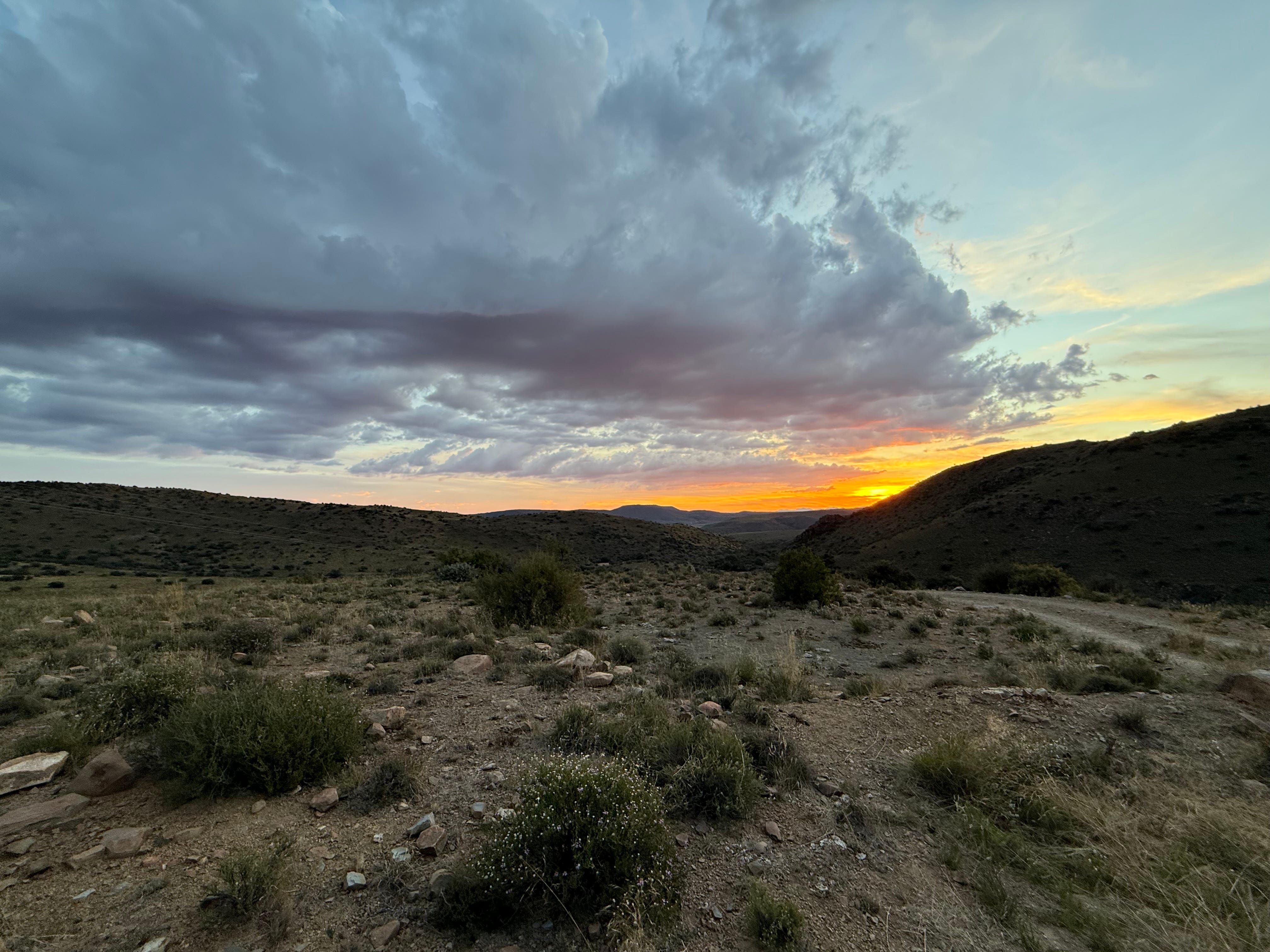
The Karoo does not try to impress you. It does not shout, it does not sparkle on command, and it does not bend to your itinerary. It just is—vast, dry, stubbornly beautiful. In that starkness, traveling with The Inventure, I rediscovered not only the landscape, but the work I do, the people I do it with, and the way I want to live.
Walking into the unpredictability of nature
Thanks for reading! Subscribe for free to receive new posts and support my work.
Nothing about the Karoo is predictable. Mornings start with a brittle chill and skies that feel endless. By mid‑day, the heat presses in, and the horizon wavers. A breeze can shift to a small storm without explanation. Long hikes made that unpredictability felt in my body: each step a negotiation with loose stones, thorny bushes, and gradients that looked gentler from a distance.
Out there, you cannot multitask your way through the day. You pay attention—to your breath, your footing, the silence, the person walking just ahead of you. When the land changes under your feet, you adjust or you fall. That simple truth is also the reality of any meaningful work in the world right now: nothing is as stable as we pretend, and the only real skill is learning to respond with presence rather than panic.
Cold plunges, breathwork, and the discipline of being
Cold plunges have a way of cutting through your stories. There is the idea of a cold plunge—good for resilience, very on trend—and then there is the moment your skin hits the water and your brain screams no. Between those two moments lies a choice: flee or breathe.
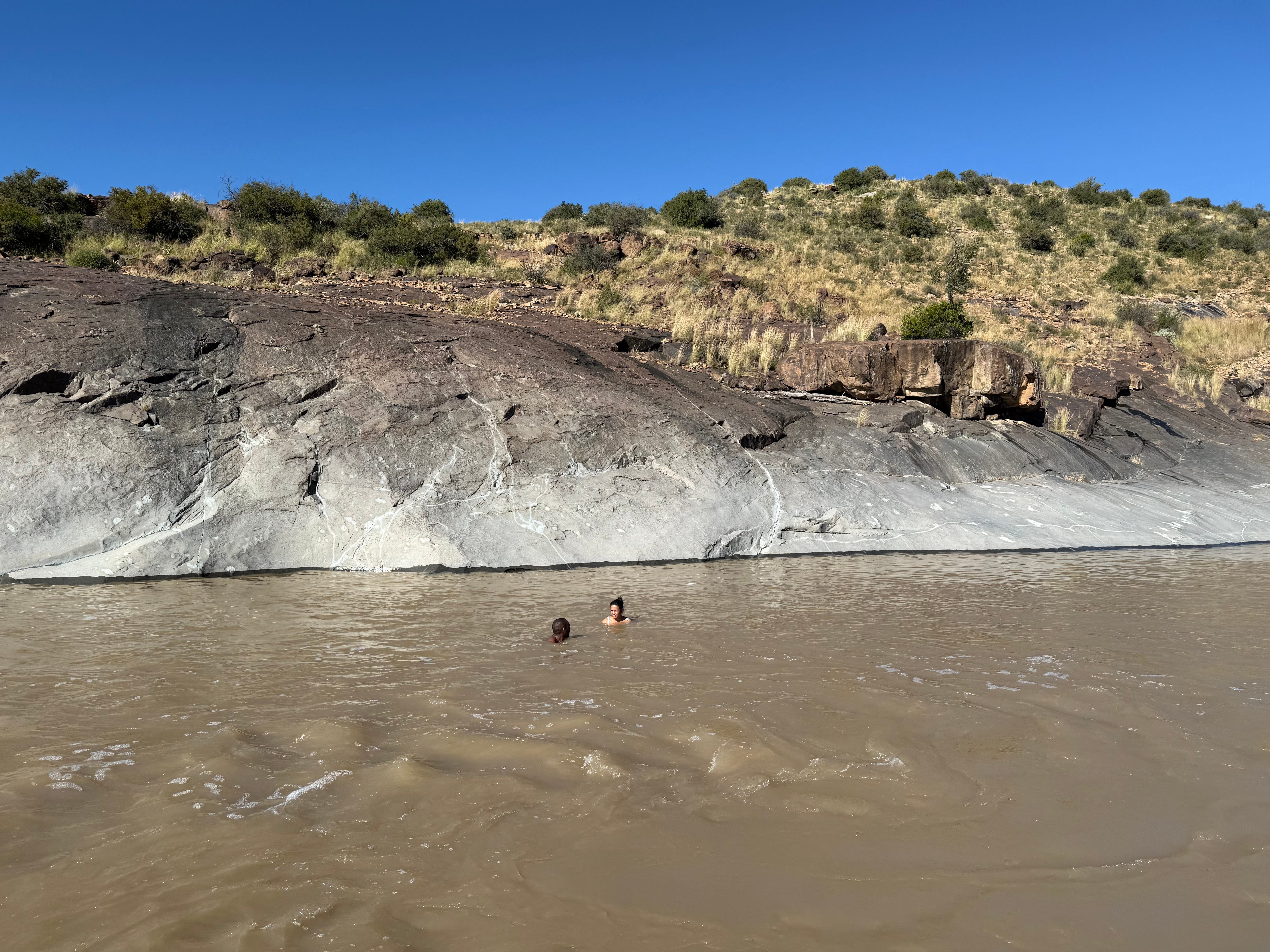
In the Karoo, we chose to breathe. Again and again. Mornings folded breathing practices and yoga into the cadence of the day, moving us from chatter into presence. My body, usually pressed into planes, office chairs, and conference rooms, began to remember different rhythms: stretch, lengthen, pause, release. It felt less like exercise and more like returning a loaned body to its rightful owner.
The cold plunges became less about proving something and more about practicing trust—trust in my body, in the group holding space around me, in the knowledge that discomfort can be a teacher rather than an enemy. That same trust is the undercurrent of my work: inviting leaders into honest, sometimes uncomfortable conversations and staying with them long enough to find clarity on the other side.
Fireside chats and the tribe we choose
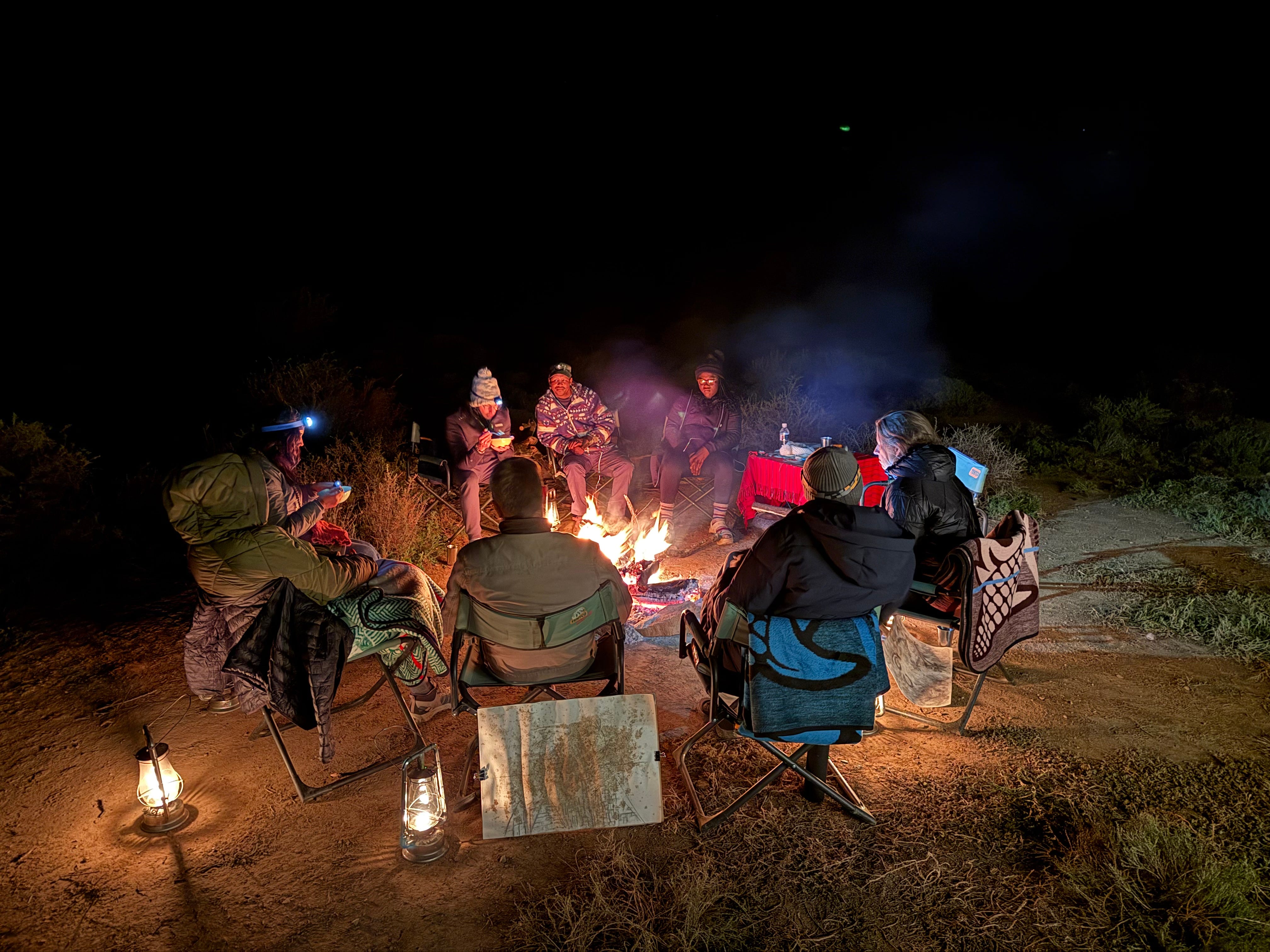
At night, the Karoo turns ink‑dark. The sky fills with stars so bright they almost hum. Around the fire, faces flicker in and out of view as the flames shift. It is the oldest human meeting room: a circle, a shared heat source, and the promise that while the fire burns, we will stay.
Our fireside chats had no agenda and no slides—just stories, questions, laughter, and the occasional long, thoughtful silence. Without phones, nobody disappeared into a screen in the middle of someone’s sentence. There was nowhere else to be but here, with these people, now.
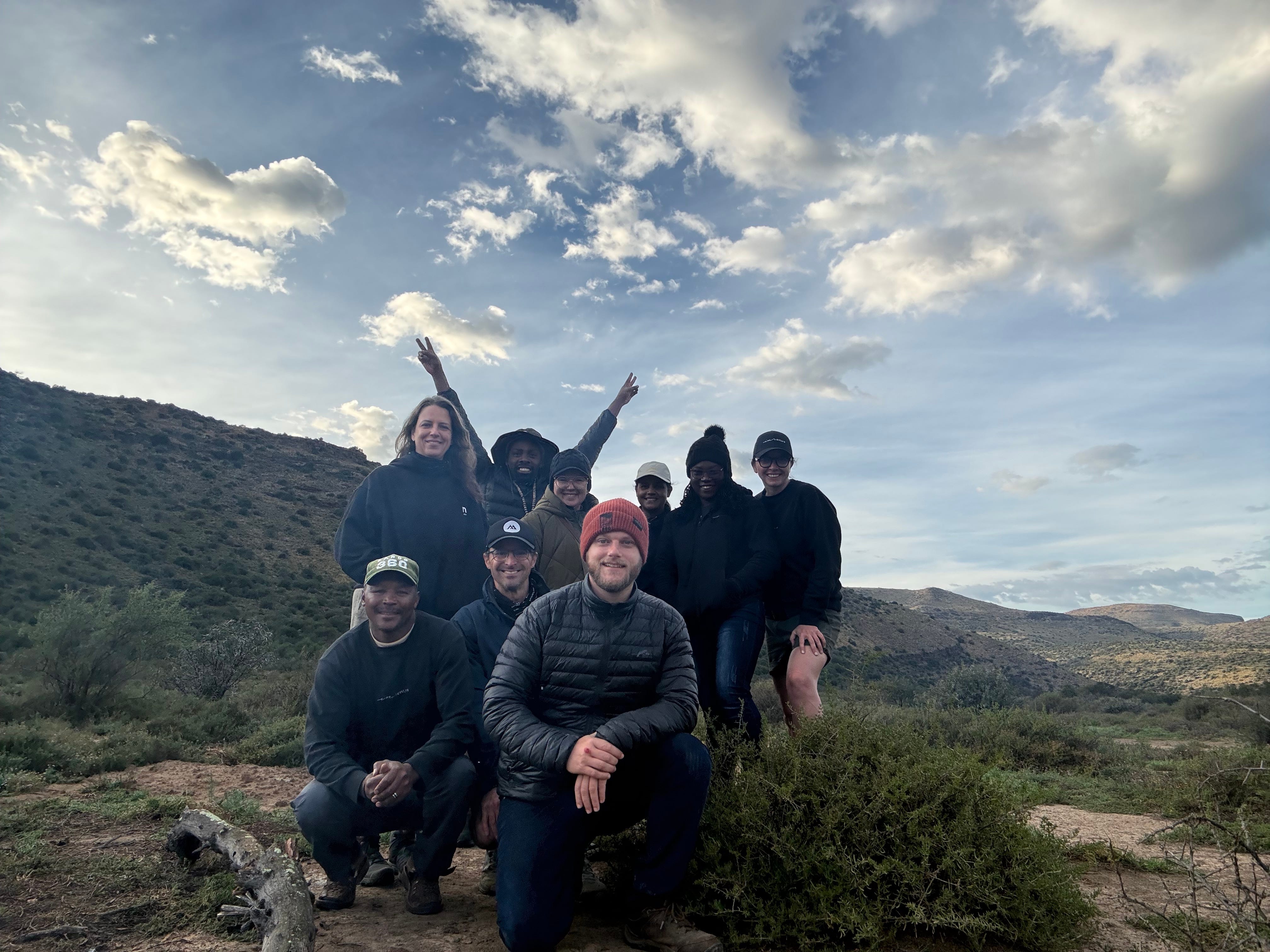
Somewhere between shared meals and shared vulnerability, I felt my tribe drawing closer. Not in the sense of possessiveness, but in the sense of recognition: these are the people who challenge me, hold me accountable, and also sit with me when no answers are available. Work so often scatters us across time zones and tasks; the Karoo quietly stitched us together again.
Brewing beads and the art of paying attention
One of the most unexpected joys of the trip came tucked into small, rough leather pouches from Slater & Dutch in Graaff‑Reinet. Each pouch held objects we had collected—stones, seeds, tiny fragments of the landscape—and became the raw material for “brewing” beads.
Threading those beads was not a fast process. Fingers fumbled, tiny pieces rolled away into the dust, patterns emerged and dissolved. It required a level of attention that my normal life rarely demands. In a world obsessed with speed and scale, here we were, absorbed in making something small and completely unscalable: a single, personal strand of meaning.
I realized how much of my professional life revolves around similar work, just on a different canvas. I help people notice what they’re carrying—beliefs, habits, unspoken fears—and decide what to thread into the story of their leadership and what to leave behind. The beads were a quiet metaphor: we are always, consciously or not, curating and recombining the objects and experiences of our lives.
Letters, poems, and the courage to love what you do
Without phone notifications to fill the gaps, I turned to letters and words that had traveled with me. Some were handwritten notes from loved ones, others were quotes and poems. Reading them in the stillness of the Karoo felt different. The words had more room to echo.
In that space, I could hear something I often rush past: To love what I do.
It’s easy to lose sight of that in the middle of deadlines, airports, and the administrative noise of running multiple ventures. In the Karoo, stripped of those distractions, my work reappeared in its simplest form: creating spaces where people can encounter themselves and each other more honestly, and where cultures—organizational, national, relational—can be navigated with more humility and courage.
The trip clarified a few commitments for me:
Bring my tribe closer. Work is easier and deeper when I travel with people who share the values, not just the objectives.
Make things easy when they can be. Complexity shows up on its own; there is no virtue in manufacturing more.
Search for maximum beauty in everything—projects, conversations, landscapes, even conflicts. Beauty, I realized, is not decorative; it is a way of paying respectful, sustained attention.
Disposable cameras and the discipline of seeing
No phones were allowed on this journey. If you wanted a photo, you reached for a disposable camera, pointed, clicked, and trusted that something would be there when the film was developed. There was no instant checking, no retakes, no curating as you went.
That constraint changed the way I saw. Instead of chasing the perfect shot, I began to ask: what is worth remembering? A shadow on a rock. A hand on a shoulder. Steam rising from coffee in the cold morning air. The camera became less a tool of performance and more a quiet companion, reminding me that most of life does not need to be documented to be real.
In leadership, we often perform in similar ways—polishing, editing, curating in real time. The Karoo invited a different practice: live first, reflect later. Be fully in the moment now; make sense of it when you have the distance and perspective to do so.
Life in the quiet is loud
What surprised me most was how loud the quiet became. With external noise stripped away, other sounds rose up: the crunch of gravel under boots, the rhythm of synchronized footsteps, the rustle of wind through dry grass, the low murmur of conversations carried across the dark.
Inside, too, things grew louder. Questions I had pushed aside came back, more insistent but also more generous. What do you really want to build? Who do you want to build it with? What will you not sacrifice, even for success?
The Karoo did not answer those questions for me. It did something better: it gave me the conditions to hear them clearly and the courage to respond. I came home with dust on my shoes, beads in a small leather pouch, film yet to be developed—and a renewed, quieter certainty that the work I do matters, the way I do it matters, and the people I do it with matter most of all.
Life in the quiet is loud. The real invitation is to listen.