


Fifteen years ago, a close colleague and I spent our days immersed in the dark anatomy of human malice, meticulously collecting data on hate victimizations. We documented the metrics of harm, archiving how words and weapons wound. Recently, that same friend and I stood together within the stark silence of the Dachau concentration camp.
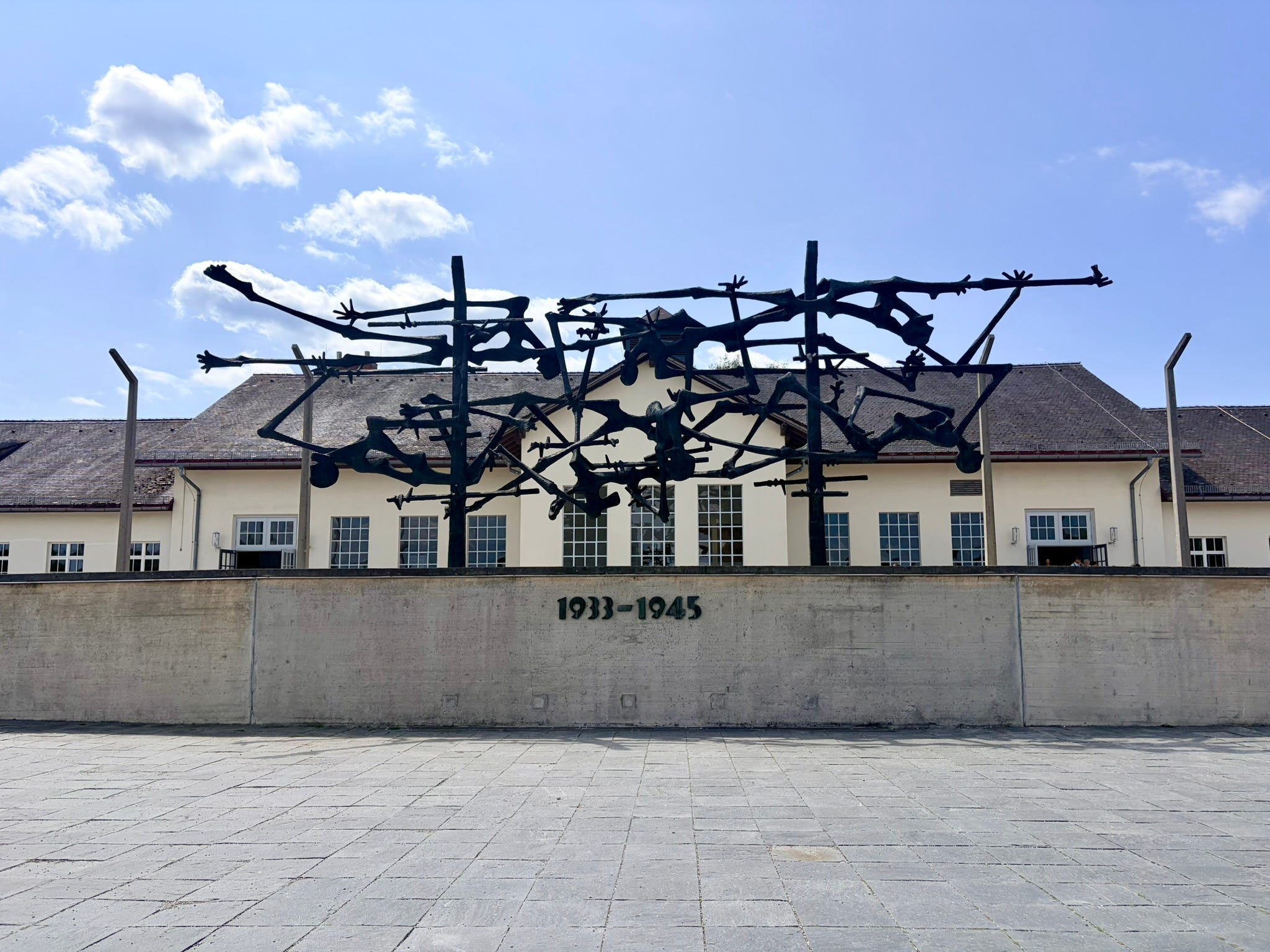
As we walked past the exhibits, we were not confronted by statistics, but by the aesthetic machinery of the Third Reich. It was a visceral, chilling reminder of a historical truth: before hate can build camps, it must build a cultural narrative.
Art, cinema, photography, and design are never neutral. They are the most potent accelerators of human behavior we possess. In the hands of the National Socialist German Workers’ Party, they were weaponized to engineering the subversion of a nation.
The Architecture of Division
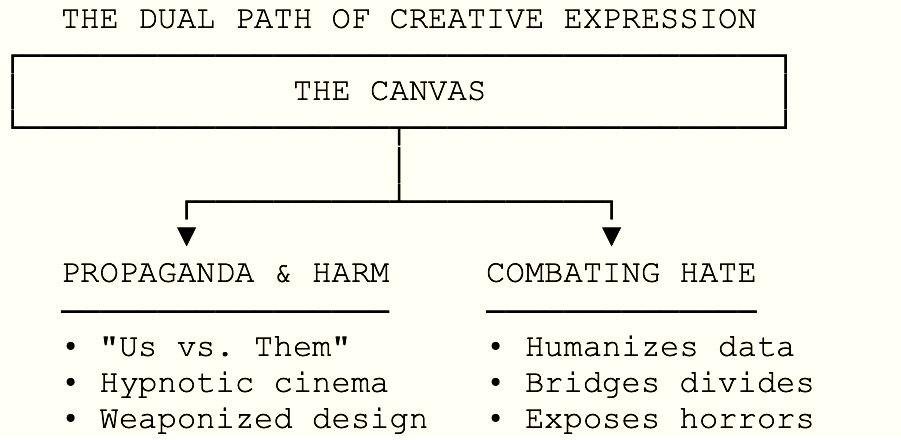
The propaganda on display at Dachau illustrates how the Nazi party orchestrated a population’s moral collapse through design. The messaging relied on a formula that remains terrifyingly effective today: a rigid, emotional dichotomy of “Us versus Them.”
Striking Visual Design: Posters used bold, clean typography and sharp geometry to project an illusion of order, strength, and modernity, making state-sanctioned malice look like civic duty.
Powerfully Emotive Language: Text did not invite debate; it triggered primal fears of pollution and displacement, bypassing logic to strike directly at the gut.
The Dual Faces of Photography: Camera lenses were manipulated to craft a divine, unshakeable “strongman” image of leadership, while simultaneously capturing carefully staged images of marginalized groups to strip them of their humanity.
The Uniformity of Clothing: Fashion was stripped of individuality and transformed into structured uniforms, visually erasing the self to absorb the citizen into a monolith of state obedience.
The Immersion of Cinema: Filmmakers like Leni Riefenstahl deployed pioneering cinematic techniques (low angles, grand scale, and rhythmic editing) not to enlighten, but to hypnotize audiences into spiritual submission to the state.
A Pattern of Weaponized Aesthetics
This subversion of creativity is not unique to World War II. History repeats this blueprint whenever mass violence is manufactured. During the 1994 Rwandan genocide, the Radio Télévision Libre des Mille Collines (RTLM) combined popular music and engaging, conversational broadcasting with lethal anti-Tutsi rhetoric, turning a cultural medium into a coordination tool for slaughter. Decades later, in Myanmar, the military junta weaponized modern digital design and social media imagery to spread highly coordinated, viral visual propaganda that fueled the systematic violence against the Rohingya people.
The Lens as a Shield
Yet, the very same tools used to engineer hatred hold the unique power to dismantle it. Photography, which the Third Reich used to manufacture a myth, was also the medium that shattered it.
Liberation photographers entered the camps and captured the raw, unvarnished horrors of the Holocaust. Those grim, undeniable negatives were transmitted to a shocked global public. They stripped away the regime’s polished aesthetic lies and forced the world to confront the devastating reality of unchecked hatred.
Subverting the Formula: Art for Cohesion
If hate relies on flattening the human experience into a monolith, revolutionary art combats hate by restoring complexity, empathy, and proximity. Today, creators across genres are using the formula of striking design and moving imagery to build social cohesion.
In cinema, Ava DuVernay’s 13th uses masterful editing, archival footage, and sharp motion design to transform dense, systemic criminal justice data into a deeply emotional, human narrative. It forces viewers out of abstract political debates and into visceral proximity with systemic inequality.
In public design, the Paper Clips Project—started by middle school students in Tennessee—transformed the unfathomable statistic of six million Holocaust victims into a tangible, physical installation of collected paper clips. It utilized minimalist spatial design to make the scale of historical loss devastatingly comprehensible.
On our streets, JR’s Inside Out Project subverts the corporate and political monopoly on public spaces. By pasting massive, high-contrast black-and-white photographic portraits of marginalized community members onto city walls, the project forces passersby to look into the eyes of the “Other” and recognize a neighbor.
The Reluctant Revolutionary’s Charge
Art cannot rewrite history, nor can it instantly dissolve systemic bigotry. However, cinema, design, and photography do something more fundamental: they dictate the boundaries of our moral imagination.
Hate victimization aims to erase the individual and their community Art insists on their presence. As reluctant revolutionaries against the rising tides of division, our task is to support, create, and elevate visual narratives that refuse to simplify the human condition. We must ensure that our creative tools are never again used to build walls, but to mirror our shared humanity.
Thank you for this superbly clear journalism which could not be more critical or timely. The sharing of articulations of how the leaders of human societies craft language, stories and images to erase empirical thinking and install an emotional uniformity of loyalty to some and hate/fear of others is essential to our survival as a democracy loyal to decency and sustainability.