

Slowcation: How Mexico Became the Antidote to Bucket-List Travel
Americans are exhausted by the checklist vacation. Mexico offers something different: permission to stop performing tourism and actually inhabit a place.


The American relationship with how we vacation has become strangely Protestant. We approach leisure with the same anxious productivity we apply to work: optimized itineraries, maximized experiences, treating a week off as an efficiency problem to be solved. The bucket list is less rejection of labor. Instead, experiences, and it’s effort by other means.
It therefore not for nothing that 91% of travelers recently told Vrbo researchers they want “slow travel” in 2026. Not a fresh destination. A different pace.
The slowcation is about extended stays in secondary destinations paired with cultural immersion rather than landmark tourism and local connection over photo opportunities. And it has emerged as the defining travel trend of the year, with Mexico its perfect expression.
Checklist Exhaustion
For two decades, Americans treated travel as accumulation. The passport stamp, Eiffel Tower wish-you-were-here selfie, a Machu Picchu hike all acted as social proof, markers of a life well-lived. Social media accelerated this logic and the performative vacation was born: tourism as content, experiences as asset.
But the sheer numbers reveal a story of fatigue. According to Expedia Group’s “Unpack ‘26” report, based on 24,000 global travelers, 70% now consider crowd levels when choosing destinations. Forty-one percent actively seek places known for fewer crowds. One in five travelers plans longer trips in 2026, while an additional 11 percent anticipate fewer trips overall, but with extended stays.
Turns out the content/asset logic has limits. Venice now charges entry fees and tracks visitors through turnstiles. Barcelona residents spray tourists with water pistols. In Mallorca and the Canary Islands, protesters have marched under banners reading “Your paradise is our nightmare.” The infrastructure of mass tourism is buckling under its own weight—and locals are done pretending it works.
Anti-gentrification protests featuring "Gringo go home" slogans and other anti-foreigner sentiments took place in Mexico City during the summer of 2025, particularly in July. These protests, which included rallies in neighborhoods like Roma Norte and Condesa, were driven by rising rents and the influx of foreign digital nomads and tourists, which locals argue is driving displacement and gentrification.
The bucket list, in other words, has a backlash. And the backlash has created an opening for something different.
What Mexico Understood
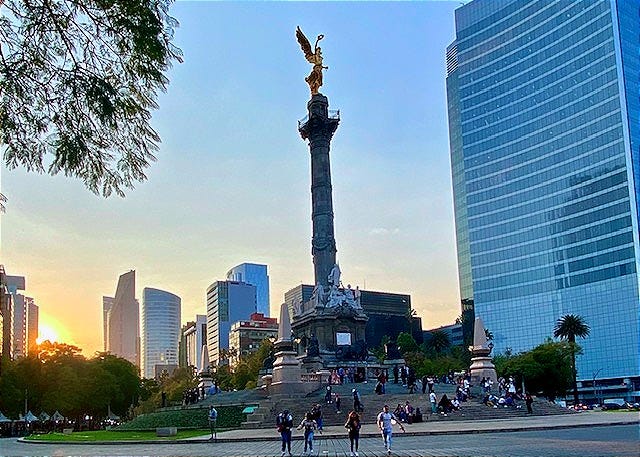
Recent protests notwithstanding, Mexico has never been short of American tourists. What it has been short of is American tourists who immerse.
The familiar Mexico of spring break mythology—Cancún all-inclusives, Cabo bachelorette parties, snappy border crossings—represents a fraction of the country’s actual geography. Beyond resort zones lies a nation that anticipated the slowcation trend by decades, largely by accident.
Consider the Pueblos Mágicos program. 177 federally designated “Magic Towns” recognized for their cultural heritage, architectural preservation, and historical significance. The government created the designation in 2001 to distribute tourism revenue beyond coastal enclaves. In 2025, it tightened standards, requiring towns to demonstrate sustainable infrastructure and cultural preservation, not just charm.
The result is a distributed network of secondary destinations that happen to be ideal for slow travel: San Miguel de Allende’s colonial streets, Oaxaca’s market culture, and Mérida’s blend of Mayan tradition and Yucatecan ease. Both seem built to encourage lingering.
Then there is the visa infrastructure. Mexico lacks a formal “digital nomad visa,” a branding exercise many countries adopted post-pandemic. What it offers is better: a Temporary Resident Visa allowing stays of more than 180 days, up to four years, with permission to open local bank accounts and work remotely for non-Mexican employers. The income threshold is roughly $2,500–$4,200 monthly, depending on the consulate, attainable for middle-class American remote workers.
Cost of living completes the picture. A single expat can live comfortably in Mexico City for $1,600–$2,400 monthly. In Oaxaca, even less. A farm stay—a Vrbo trend du jour, with 84 percent of travelers expressing interest—might cost $800–$1,200 monthly in a Pueblo Mágico, a fraction of a comparable Airbnb in Tuscany or Provence.
The Wellness Infrastructure
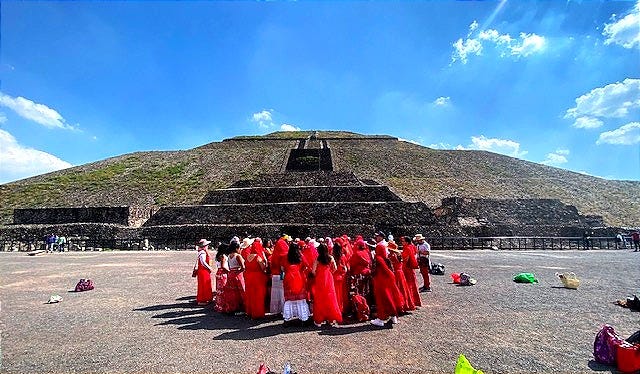
Mexico has long attracted Americans seeking wellness, though the framing has shifted. In the 1950s, it was cancer patients crossing the border for treatments unavailable in the United States. Today, it’s yoga retreats, Temazcal ceremonies, and “integrative wellness” resorts that blend Mayan ritual with sound healing.
The difference is scale. Wellness is no longer peripheral to Mexican tourism. It is central. Retreats like Rancho La Puerta in Baja California, Mar de Jade in Nayarit, and Chablé Resort & Spa near Mérida have institutionalized the slowcation logic: extended stays, holistic programming, connection to place rather than landmark.
The wellness angle matters because it reframes what Americans are actually seeking. It is not just relaxation. It is repair. Two decades of hyper-productive work culture, compounded by pandemic-era burnout, have created a population that does not know how to stop. The slowcation offers structured permission—an environment where rest is not laziness but part of a wellness protocol.
Mexico provides this at a price point that European destinations cannot match. A month in a Tuscan agriturismo requires capital most Americans lack. A month in an Oaxacan farm stay does not.

The Power Shift
The slowcation is often framed as an aesthetic preference. Travelers choosing “authentic” experiences over mass tourism. But it represents something more structural: a power shift toward local economies and away from the infrastructure of checklist travel.
Mass tourism concentrates revenue in a handful of chokepoints: airports, hotel chains, tour operators. Slow travel distributes it. A month-long stay in Todos Santos means meals at local restaurants, groceries from neighborhood markets, purchases from independent artisans. The economic multiplier operates differently.
Mexico’s Pueblos Mágicos program was designed for exactly this distribution. The 2025 reforms—stricter designation standards, sustainability requirements—reflect an acknowledgment that unmanaged tourism erodes the authenticity that attracts visitors in the first place. The program is not altruism. It is economic logic.
But the shift is fragile. The same infrastructure that makes Mexico attractive for slow travel: affordable cost of living, relaxed visa policies, secondary destinations with cultural depth, also attracts the investment capital that transforms authentic towns into expat enclaves. Mexico City’s Roma and Condesa neighborhoods have already seen rents rise sharply as Americans and Europeans colonize the coffee shops. The slowcation, if scaled carelessly, becomes the next phase of displacement.
None of this is an argument for staying home. Mexico rewards the traveler willing to accept friction as the price of encounter—the missed bus, the menu without translation, the market stall where nothing is priced and everything requires negotiation. The corrective is not heroic. It doesn’t require learning Spanish to fluency or sleeping in the mountains. It requires, simply, choosing the city over the compound, the mercado over the buffet, the slow afternoon in a neighborhood plaza over the curated shore excursion. The tourist who does that is not saving Mexico. But they are, at minimum, arriving.
What It Reveals
The slowcation is a travel trend. It’s also a symptom of American exhaustion and a test of whether leisure can be reclaimed from the logic of accumulation.
Mexico’s advantage is accidental. It built infrastructure for long-term visitors without meaning to, then watched as Americans discovered what the country had offered all along: a different pace, a lower cost, a place where the vacation is not a performance but an interval of actual life.
Whether that lasts depends on whether travelers can resist turning slow travel into another badge of distinction. The “authentic” alternative to the bucket-list crowd, a new form of status-seeking. The logic of accumulation is resilient. It adapts.