

The 2026 Senate: Democrats’ Moment or Mirage?
Democrats' 2026 Senate hopes rise on Trump's decline and registration gains, but rural bias, party infighting, and message gaps risk predictable failure.

The arithmetic is deceptively simple: Republicans currently hold 53 seats to the Democrats' 47, meaning the party needs a net gain of four to claim the majority. That number alone obscures the daunting geography of the Senate map. Of the 34 seats up for election, at least eight are considered plausible pickup targets for Democrats—a rarity for a party that, until recently, was stuck playing defense in a chamber structurally rigged against them. These targets range from long-shot opportunities in deep-red states to genuine toss-ups in presidential battlegrounds like Pennsylvania and Wisconsin. The catch? Democrats must win seats in states that have, for years, rejected their brand of politics, a task made harder by the Senate's rural-state bias, which amplifies the voice of sparsely populated areas that have trended steadily Republican.
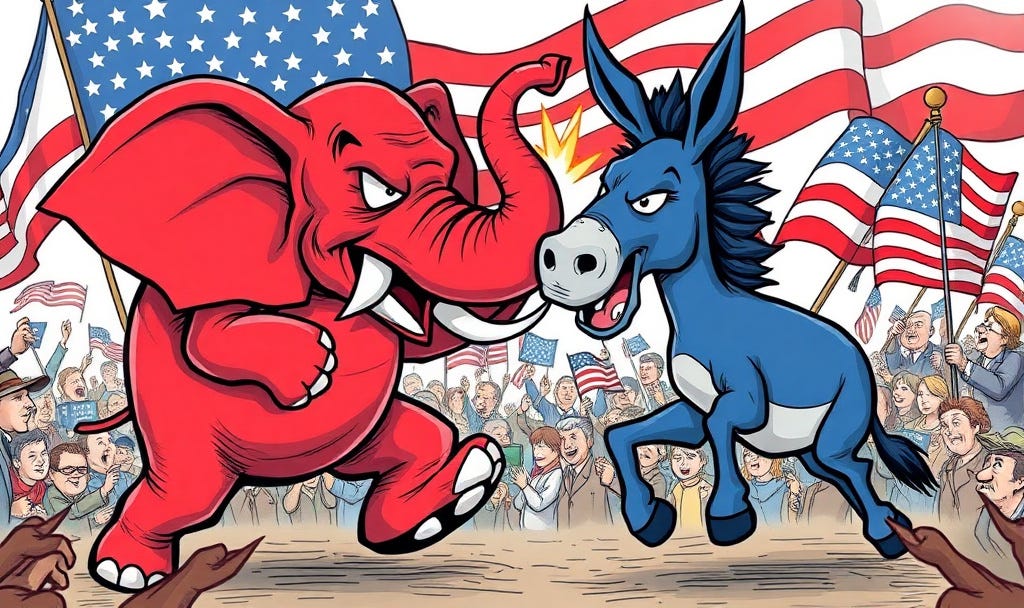
The Senate Math—A Map Demanding Miracles
The Senate landscape offers Democrats a rare gift: at least eight plausible pickup targets, from genuine toss-ups in Pennsylvania and Wisconsin to long-shot opportunities in deep-red states. Betting markets now treat control as a virtual coin flip, a dramatic shift from conventional wisdom just three months ago. Analysts cite President Trump’s sinking approval (41% in some surveys) and the historical midterm curse—presidential parties lose an average of 4 Senate seats—to explain the optimism.
But the structural realities of the Senate remain inscrutably biased toward Republicans. Democrats haven’t won a Senate majority in a decade, and when they did in 2006, they secured seats in states like Montana and Virginia—places that have since drifted further into the Republican column. The map before them now demands victories in states like Ohio, North Carolina, and maybe even Missouri, where Democratic Senate candidates have lost by double digits in recent cycles. The betting markets may price in a Democratic wave, but the geography suggests that even a sub-50% approval rating for Trump may only yield the historical 3- to 4-seat loss—leaving Democrats once again tantalizingly close but ultimately short. The old adage still holds: you can’t gerrymander a state line.
Ground-Level Gains and Factional Fights
While headlines focus on macro trends, Democrats are quietly building their case on the ground. In Pennsylvania—a state Trump won twice—the party erased a three-decade Republican registration edge to now lead by 177,000 voters. State Party Chair Eugene DePasquale credits years of investment in data and door-knocking, particularly in Philadelphia suburbs and among younger voters in Pittsburgh.
That blueprint is championed by local officials like Lehigh County Executive Joshua Siegel, who won over 60% in a Trump-voting county by focusing on tangible problems: property taxes, mental health access, transit. “People don’t care if you’re progressive or moderate when their potholes aren’t fixed,” he argues. The approach marries progressive policy with hyper-local service delivery—making Democratic governance mean something concrete.
Not everyone buys it. California Democrats’ endorsement of aging incumbents over younger challengers in House races reveals the establishment’s priority: retaking the chamber with “tried-and-true” candidates, not risk. Grassroots activists counter that failing to refresh the bench is why the party struggles to connect with voters on affordability and jobs. The tension is familiar, but the stakes are higher in 2026, when unity matters more than ever.
Trump’s Wild Card and Economic Headwinds
Trump’s approval (43% approve, 51% disapprove) is historically low for a president in his midterm. Consumer sentiment is “abysmally low” despite decent economic numbers. Normally, that spells disaster for the president’s party. But Trump’s unique ability to command media and motivate his base means Democrats cannot simply assume his unpopularity will rub off on GOP incumbents. They must make the connection themselves—a task that has often eluded them.
Early off-year elections in March 2026 show a complex picture. In Texas, moderate Democrat James Talarico won a special congressional election over a combative progressive, suggesting swing suburban voters remain up for grabs. Meanwhile, Texas Republicans head to a runoff between the somewhat moderate John Cornyn and the far-right Ken Paxton, a division Democrats hope to exploit. Yet Talarico’s victory came in a district already leaning Democratic—not in a true heartland seat where Democratic challenges run deeper.
The party’s greatest vulnerability may be the economy. Post-2024 analyses show voters trust Trump more on jobs, border security, and cost of living—the kitchen-table issues. Democrats’ coalition of affluent college-educated suburbanites has struggled to speak to working-class voters feeling left behind. The “building back better” message rings hollow when grocery bills rise. Closing this persuasion gap requires more than policy tweaks; it demands a fundamental rethink of how Democrats talk about work, wages, and dignity.
What Democrats Must Accomplish
First, candidate quality matters. Democrats need nominees who appeal beyond the activist base in states like North Carolina, Ohio, and Wisconsin—places where generic Democrats poll reasonably well but where specific candidates often falter under Republican attack ads. In North Carolina, former Governor Roy Cooper faces Michael Whatley in a primary testing whether the party can unite behind a candidate with crossover appeal. Cooper’s moderate profile and executive experience make him the kind of standard-bearer Democrats believe can win in a purple-trending-red state. But primaries are volatile, and the party’s progressive wing has shown a willingness to challenge incumbents even when the stakes are high.
This leads to the central strategic dilemma: how much to nationalize versus localize. The temptation to make 2026 a referendum on Trump is powerful—his approval is the party’s greatest asset. But over-nationalization risks losing the local connection that Siegel’s blueprint demonstrates. The sweet spot may be what Democratic operatives call “rooted nationalization”: tying GOP incumbents to an unpopular Trump while simultaneously telling a story about local Democratic solutions to housing, health care, and infrastructure. It’s a delicate balance—too much Trump, and voters see a party still obsessed with the former president; too little, and they miss the overarching narrative that explains why every Senate seat matters.
The Pennsylvania registration advantage proves sustained investment pays off, but turning antipathy toward Trump into votes requires intensity. Will voters who dislike Trump show up in sufficient numbers to elect a senator in a state he won? Democrats are betting the stakes—control of the Senate, and with it, the ability to shape or block the president’s agenda—will spur turnout. But midterm electorates are smaller and older than presidential ones, and the party’s base of younger, diverse voters is historically fickle. The final months will see an avalanche of spending on digital ads, door-knocking, and mailers, all aimed at bridging the gap between structural advantage and actual votes.
The Brewster Take
Democrats’ 2026 opportunity rests on a fantasy: that they can become a party of local problem-solvers while their national identity remains trapped in perpetual opposition. The Senate map may offer eight paths to power, but the party’s identity crisis offers only one destination—more of the same. Until Democrats reconcile their establishment pragmatism with progressive energy, until they craft an economic message that doesn’t sound like a focus-grouped compromise, and until they prove they can win where they’ve lost before without tearing themselves apart, the midterms will be just another chapter in the same old story: a party forever on the brink, forever failing to seize the moment.