


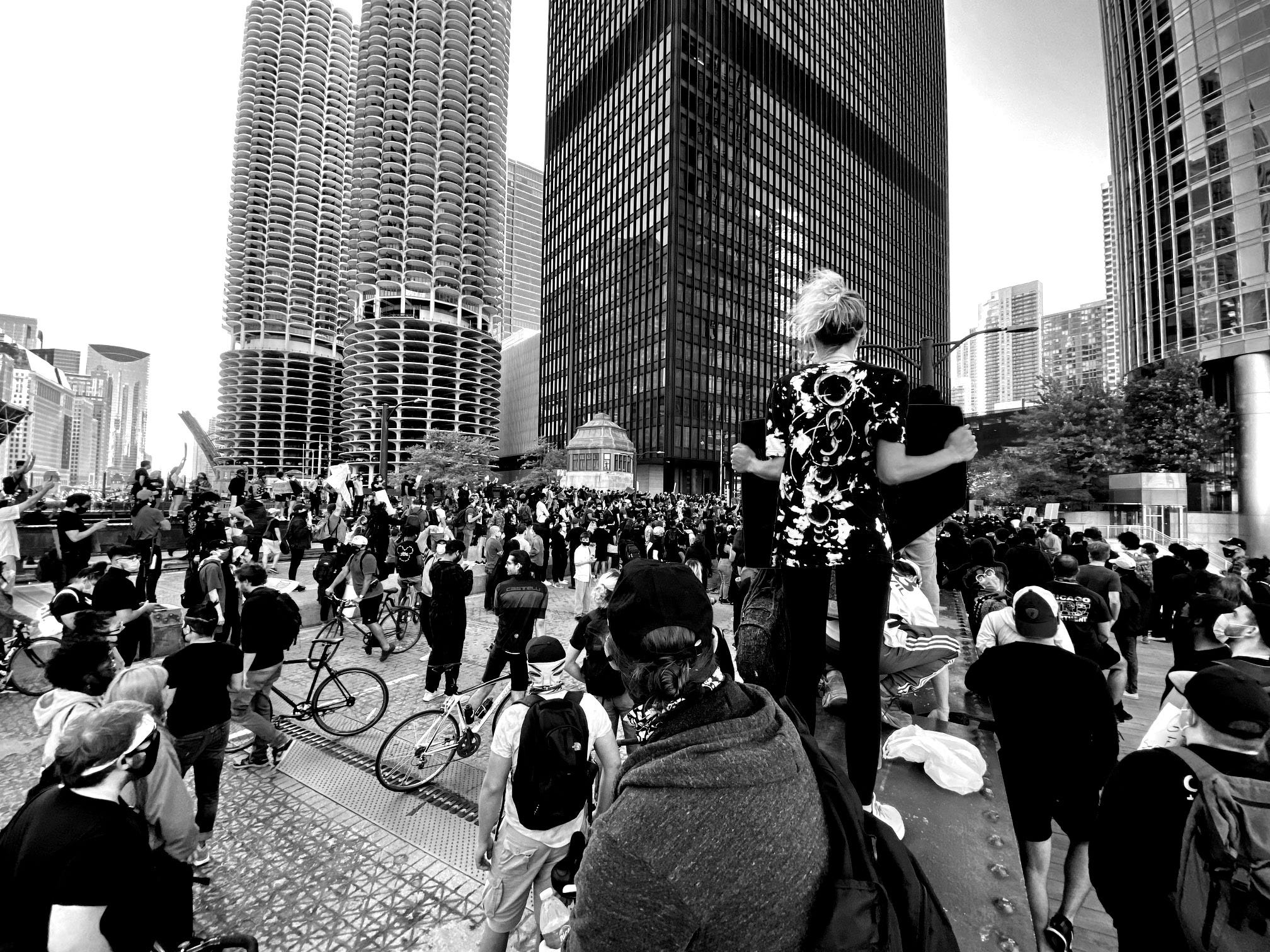
The transition from passive observer to reluctant revolutionary is rarely ignited by a dense policy brief or sweeping ideological conversion. As the framework insists, it is a certain “pop-that-gum-one-more-time” moment. The instant when accumulated tolerance snaps under the weight of one more intolerable act.
For the Midwestern schoolteacher or suburban parent in recent months, that threshold crystallized not in abstract debates over immigration enforcement but in the visceral reality of federal agents killing American citizens: Renée Nicole Good, a 37-year-old mother of three and poet, fatally shot by an ICE officer in Minneapolis on January 7 after attempting to drive away from agents surrounding her car; Alex Pretti, a 37-year-old ICU nurse, killed by Border Patrol agents during an altercation nearby on January 24; Keith Porter Jr., a 43-year-old Black father of two, shot by an off-duty ICE agent outside his Los Angeles apartment on New Year’s Eve 2025.
These weren’t distant headlines. They were neighbors’ stories, community vigils, and local outrage that made silence feel like complicity. The limit had arrived: the point where the personal cost of inaction finally exceeded the perceived risk of stepping forward.
The Paradox of Scale: Us vs. The Machine
There is an inherent tension between the solitary revolt—the individual’s raw moral refusal—and the national apparatus needed to make it consequential.
The power of the No Kings movement resides in its Camusian essence: the simple, unadorned act of a person declaring, "This far and no further.” A schoolteacher who opens her living room for safety marshal training, a parent that signs up to host a small rally, and a retiree who joins a de-escalation session. None are gestures of grand strategy but rather refusals rooted in conscience. The solitary 'No' finds its collective voice through a sprawling infrastructure.
Over 3,000 events are registered across all 50 states and every congressional district for March 28, surpassing the October mobilization that drew an estimated seven million participants across 2,700 events. Indivisible handles registrations and communications.
The ACLU runs Know Your Rights sessions. The American Friends Service Committee trains safety marshals in de-escalation. The AFL-CIO coordinates labor support. Bruce Springsteen is scheduled to perform at the Minneapolis flagship. Events range from that march to gatherings in Mississippi suburbs and small-town New Jersey.
One risk is dilution. When moral outcry becomes a line item in a donor drive or a slot on a national map, does it lose its revolutionary heat? The coalition counters this by emphasizing local agency: safety trainings stress community-led de-escalation, and events range from flagship marches (Embarcadero Plaza to Civic Center in San Francisco, 7th Avenue and Central Park South in New York) to dozens in New Jersey or Mississippi suburbs. Accountability stays close to home even as numbers swell.
Competing Fires: Domestic Erosion vs. Global War
While the “No Kings” movement solidifies its domestic front, it faces a rival for the national psyche: the smoke from Operation Epic Fury. There is a calculated convenience in global conflict; power has always used the horizon’s flames to obscure the damage being done at home. As casualty reports and energy prices dominate the screens, the administration bets on a classic trade-off: that the American public will defer its quest for domestic justice in exchange for the perceived safety of a wartime footing. Operation Epic Fury’s escalating strikes in the Gulf, rising energy prices, and casualty reports—these dominate screens and conversations, a classic tactic of power: foreign crisis to justify or obscure domestic overreach.
As of March 24, at least 290 American service members have been wounded and 13 killed since the operation began on February 28. In response to U.S. strikes that "obliterated" Iran's nuclear infrastructure, Iran has launched retaliatory strikes against regional energy hubs, including major gas fields in Qatar and oil facilities in the UAE.
President Trump has claimed that Iran recently gave the U.S. a significant "present" related to the flow of oil through the Strait of Hormuz, suggesting a potential diplomatic opening, even as Secretary of War Pete Hegseth warned that the U.S. is "negotiating with bombs."
The machinery of “Operation Epic Fury” and the domestic normalization of ICE-related violence are not static; they’re accelerating. We’re in a volatile window where silence is being codified into law. Every day without a collective “No” allows the extraordinary to become the mundane. If the infrastructure of resistance isn’t tested and solidified now, we risk waking up to a landscape where the right to gather is curtailed and the neighbor we failed to protect, gone. Hyperbole? Maybe. But is it worth taking the risk to find out?
The Iran war is also used to justify a partial government shutdown as the administration and Congress clash over DHS funding, directly leading to the chaos at airports. As of March 23, ICE agents have been deployed to at least 14 major U.S. airports (including JFK, O’Hare, and Atlanta) to assist with the TSA staffing crisis caused by the shutdown. Border Czar Tom Homan is managing the rollout, describing the agents as a “force multiplier” for tasks like line management and crowd control.
Power benefits from distraction; civic muscle atrophies in silence. By choosing to mobilize on March 28 despite the world being on fire abroad, we enact a secondary revolt. It signals that we refuse to let authoritarianism drift at home and be sidelined by “greater” overseas threats. It’s the harder path. Defending the neighbor at the door while the television broadcasts dangers across the ocean demands prioritizing constitutional erosion when global emergencies scream for deference.
The Historical Echo
The through line from the 2017 Women’s Marches is direct, and the evolution unmistakable. Back then, momentum was reactive, sparked by an election, bursting in single-day millions but struggling to sustain without deeper roots. The current movement is proactive and resilient: built on sustained resistance since 2025, with prior No Kings actions (millions in June, seven million in October) forging infrastructure and experience.
Where 2017 focused on general opposition, March 28 targets specific moral thresholds, channeling outrage into nonviolent, community-grounded actions across every state.
Power relies on the “good citizen” to remain distracted by the horizon while the floorboards are being ripped up beneath them. By prioritizing global casualty reports over the local killing of a nurse or a poet, we fall into a trap of strategic paralysis. To defer outrage is to subsidize our own disenfranchisement. The fire is not just in the Gulf; it is at the doorstep of every suburban home and city apartment mentioned in these vigils.
The Enduring Threshold
Outrage alone, like grief, is a powerful catalyst, but it has a shelf life. The transition to the March 28 mobilization represents the hardening of anger into a political shield. We have moving past the era of symbolic exasperation and disbelief and into tactical refusal. The question is no longer “How did this happen?” but “How do we make it stop?”
The ultimate measure of March 28 will not be the final headcount at Embarcadero Plaza or the dozens of events in New Jersey. It will be whether threshold moments endure. If the schoolteacher who hosted a meeting in her living room continues saying no to the normalization of violence long after banners are folded, if ordinary refusals harden into habits of civic vigilance, then the act of resistance succeeds in its truest aim: rebuilding trust when institutions falter, proving that revolt, in its simplest form, can outlast distraction and scale alike.
The threshold of tolerance isn't just crossed in the streets of our cities; it is being eroded in that queue for a flight to see family. By deploying unmasked ICE agents to manage TSA lines at JFK and O’Hare, the administration has turned the airport, a space of transient freedom, into a theater of domestic microaggressions. It does not portend well for the ‘26 midterms, with many suggesting that the normalizing of ICE at airports sets the scene for similar visibility at voting centers later this year.
When the state uses a global war as a pretext to normalize 'secret police' at the gate, 'No Kings' isn't just about policy quibbles anymore; it's about reclaiming the right to exist in public without the intimidating weight of an agent’s gaze.