

The Architecture of Refusal: Chicago and the End of 'Advisory Democracy'
When the performance of accountability loses its substance, the "reluctant revolutionaries" of the Chicago Alliance are left with only one word: No.


For decades, the American municipal project has operated on a comfortable, if fraying, myth: that the police are an organ of a state capable of self-correction through gentle nudging of “oversight boards” and “advisory committees.” It is a narrative of incrementalism, a belief that the machinery of justice simply needs a bit more grease, a few more body cameras, and a marginally more diverse recruitment brochure.
But in the drafty halls of Chicago’s City Hall, a more potent reality is taking shape. The re-introduction of the CPOP Referendum represents a fundamental collapse of faith in the advisory model. It is the political manifestation of Camus’s “revolt”. The moment when a community, fatigued by the performance of accountability without its substance, simply says no.
From Resistance to Governance
The Chicago Alliance Against Racist and Political Repression is not a new phenomenon; it is a multi-generational institutional memory. Born in 1973 out of the global mobilization to free Angela Davis, the Alliance has spent over half a century “holding the line” against what they define as a systemic “closed power loop.” For the Alliance, the current state of policing is not merely a series of budget disputes—it is an “occupation” that necessitates a permanent defense mechanism rather than a temporary protest movement.
This longevity provides the fuel for the “fuck-it moment.” This is the precise psychological and political tipping point where a community decides that the risks of challenging an entrenched status quo are finally outweighed by the daily danger of living under it.
While the Alliance has historically focused on defense—freeing the wrongfully convicted and supporting survivors through their CFIST campaign—the CPOP Referendum marks a pivot toward sovereignty. They are no longer asking for a seat at the table of “advisory democracy”; they are moving to rebuild the table entirely. By demanding the power to negotiate police union contracts and set the CPD budget, they are attempting to transform the “fuck-it moment” into a permanent fixture of municipal law.
Why Conventional Explanations Fail
Mainstream pundits often frame the CPOP referendum as a “left-wing” attempt to “defund” or “disrupt” public safety. This view fails because it ignores the historical-philosophical framework of the struggle. The Alliance is not seeking chaos; it is seeking the sovereignty of the neighbor. By demanding that District Council meetings serve as the primary site of safety discourse, they are attempting to repatriate power from an opaque bureaucracy back to the sidewalk. Conventional analysis sees a policy dispute; the Alliance sees a restoration of the democratic norm where the governed actually govern the force that polices them.
What is Actually Happening
We are witnessing the “diminishing returns of the $50 million hammer.” As municipal budgets expand to cover police settlements and militarized equipment, the social contract shrinks. The Alliance’s CFIST campaign—focused on freeing torture survivors and the wrongfully convicted—reveals that the institutional stress is no longer sustainable.
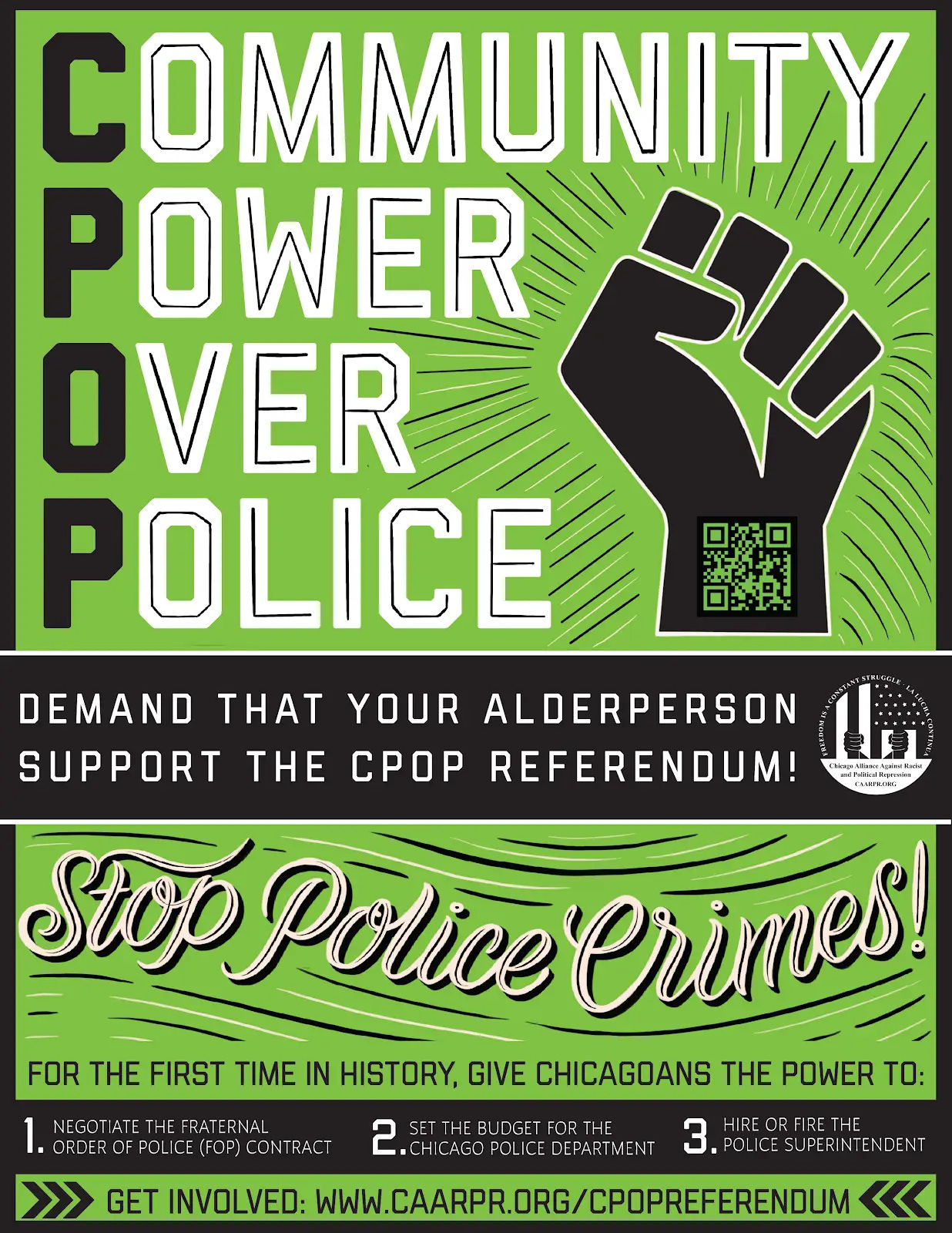
When a city’s legal apparatus becomes a factory for wrongful convictions, “reform” is an insufficient vocabulary. The demand for “Community Power Over Policing” is an admission that the existing institutions are not just broken—they are misaligned with the very concept of liberty.
Closing the Accountability Loop
The core of the movement rests on a simple premise: those who are policed should have the power to decide how that policing happens. Currently, the Community Commission for Public Safety and Accountability holds significant oversight, but the proposed referendum seeks to expand and “democratize” this body by:
Direct Elections: Transitioning the Commission to an 11-person body where 9 members are directly elected by Chicagoans.
Budgetary Control: Granting the Commission the power to set the CPD budget, ensuring taxpayer dollars align with community priorities.
Contract Power: Allowing the Commission to negotiate police union contracts, a move intended to prevent “anti-accountability” measures—like the destruction of misconduct records—from being baked into labor agreements.
Hiring and Firing: Giving the body the authority to hire or fire the police superintendent and members of the police board for cause.
The Opposition: A System Under Pressure
The push for the referendum comes in response to what activists call “provisions designed to shield police from accountability.” Recent victories, such as the City Council’s rejection of private arbitration for severe misconduct cases, have shown that public pressure works. However, organizers warn that without control over the police contract and budget, these gains remain vulnerable to legal challenges and behind-the-scenes negotiations.
“Our gains in the fight for accountability have been great, but until we gain control over the contract and the budget, we will continue to see the FOP erode the accountability we are able to achieve.” — CAARPR Statement
As Chicago approaches the 2026 midterms, the CPOP referendum stands as a test of whether the city is ready to move from oversight to true community control. The transition from refusal to realization now rests in the hands of the legislative process.
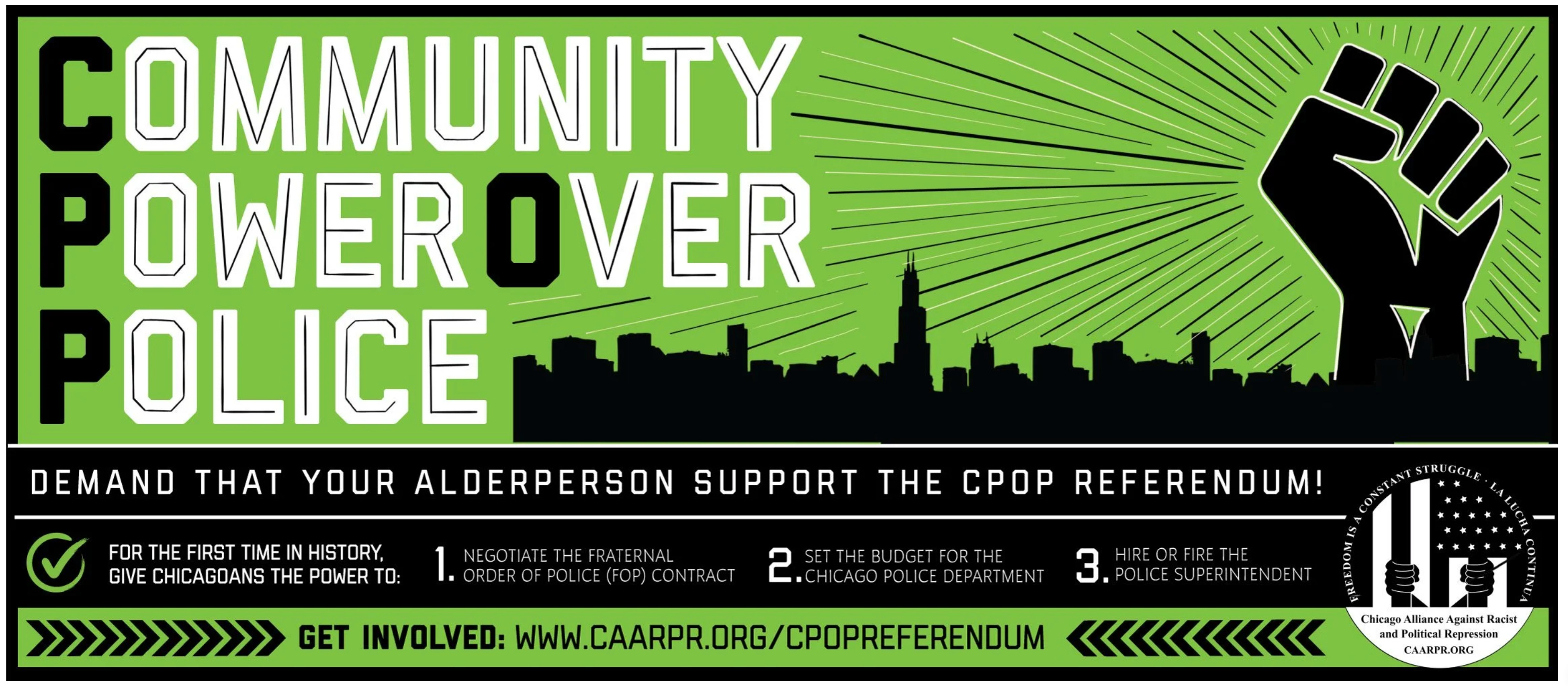
How to Join the Movement
The path to the ballot requires a majority vote in the City Council. Supporters are currently using the CPOP Action Toolkit to mobilize. Key actions include:
Contacting Alders: Residents are being urged to call or email their representatives to support Ordinance #O2025-0019935.
Community Canvassing: Using printable graphics and flyers to educate neighbors on the impact of a directly elected commission.
Weekly Strategy: The Stop Police Crimes Committee meets every Monday at 6:00 PM to coordinate citywide efforts.