

Arson of Empathy: Is Targeted Hate the New Global Currency?
When Ambulances and Embassies Become Fair Game

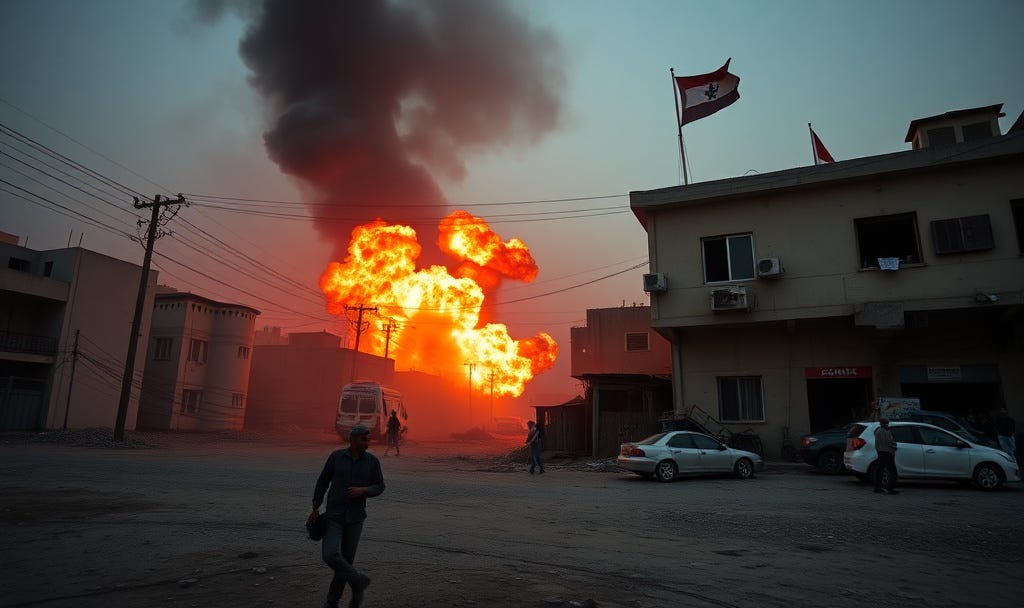
In the early hours of March 23, 2026, four ambulances belonging to Hatzola Northwest—a Jewish volunteer emergency service in Golders Green, London—were deliberately set ablaze. The vehicles, marked with the Star of David and serving as lifelines for a community long plagued by antisemitic attacks, were reduced to charred shells. No one was injured, but the intent was clear: even the infrastructure of healing had become a legitimate target.
Weeks earlier, on March 1, 2026, protesters in Karachi breached the outer perimeter of the U.S. Consulate amid fury over U.S. and Israeli strikes on Iran. Security forces, including Marines, opened fire, resulting in at least 10 deaths and dozens of injuries in the clashes. A diplomatic post—meant to be inviolable under the 1961 Vienna Convention on Diplomatic Relations—turned into a flashpoint of violence.
These incidents are not mere parallels; they embody the same tactical logic: moral arson. The aim is not primarily policy change or mass casualties. It is the deliberate incineration of symbols of empathy and neutrality. To declare that the “other” deserves no protected space, no healer, no channel for dialogue.
Torching an ambulance attacks the premise that an enemy’s sickness warrants treatment. Storming a consulate rejects the idea that adversaries deserve any forum for negotiation. This marks a de-civilizing shift: violence directed not just at bodies, but at the very idea of shared humanity.
The Infrastructure of Humaneness
For decades, international humanitarian law has constructed an “empathy infrastructure”—neutral spaces and symbols designed to survive even the fiercest conflicts. The 1949 Geneva Conventions and 1977 Additional Protocols shield ambulances, hospitals, and aid workers from attack. The Vienna Convention affirms the inviolability of embassies and consulates, preserving lines of communication when everything else collapses.
These protections are not technicalities; they are civilizational guardrails against total war. Yet they are now under sustained, intentional assault. The London arson and Karachi breach signal a qualitative escalation: from incidental “collateral damage” to deliberate symbolic destruction. The ambulances were the target. The consulate was besieged not merely to protest but to obliterate its meaning as a neutral outpost.
Data from humanitarian monitors shows a troubling rise in such attacks. While exact global percentages vary by year, records from the Aid Worker Security Database and related reports document record or near-record incidents against health and aid workers in recent years, driven by conflicts in places like Gaza and Sudan, with broader patterns of violence against protected spaces.
Algorithms as Engines of Dehumanization
One day after the London attack (on March 25, 2026), a California jury delivered a landmark verdict against Meta Platforms and YouTube (Google). The companies were found liable for designing addictive platform features that contributed to youth mental health harm, with the jury awarding millions in compensatory damages in a case highlighting how engagement-driven algorithms amplify harmful content.
The mechanism is straightforward: outrage and dehumanizing narratives—framing out-groups as vermin, threats, or irredeemable—drive higher engagement than calls for empathy. Platforms did not invent hatred, but their algorithms industrialized its spread, making it more visible, normalized, and monetizable.
Social psychologist Albert Bandura’s work on moral disengagement shows how repeated exposure to such framing lowers psychological barriers to real-world violence. When digital feeds normalize the idea that certain groups “deserve no mercy,” the leap from viral clip to burning ambulances or storming consulates becomes shorter. Hate becomes performative spectacle—and profitable.
The Mob Veto and the Death of Diplomacy
The Karachi incident exemplifies the rise of the “mob veto” over the diplomatic table. Diplomacy assumes a baseline humanity in one’s adversary; it requires believing that dialogue, however tense, remains possible. Moral arson rejects that foundation outright.
A consulate’s architecture—its gates, flag, and ceremonial spaces—embodies the cosmopolitan bet that words can persist amid hostility. Breaching it performs the erasure of the other’s legitimacy. Similar patterns appear in reports of rising attacks on diplomatic and humanitarian sites, where the goal shifts from leverage to symbolic annihilation.
When neutral spaces can be vetoed by violence, de-escalation becomes nearly impossible. The attackers in Karachi did not come with demands; they came to negate the space for demands. They came to incinerate the possibility of demanding anything at all.
The Pentagon Prayer: Rhetoric from the Top
Street-level arson does not happen in isolation. On March 25, 2026, during a Pentagon Christian worship service, Defense Secretary Pete Hegseth prayed for “overwhelming violence of action against those who deserve no mercy,” invoking Scripture and calling for every round to find its mark against enemies of righteousness.
The danger of this rhetoric lies in its totalizing nature. When "mercy" is removed from the equation, the distinction between a combatant and the infrastructure that sustains human life—the ambulance, the hospital, the diplomatic outpost—evaporates.
If the enemy is framed as an existential "enemy of righteousness," then the neutral symbols protected by the Geneva Conventions are no longer sanctuaries; they are seen as obstructions to "overwhelming violence." This shift in language from the top doesn't just mirror the violence in the streets; it provides the theological and moral framework to justify it, signaling that the era of the protected observer is over.
This is not isolated rhetoric. When senior officials frame adversaries in terms that strip them of basic humanity, it provides top-down validation for the dehumanization already flourishing online and in the streets. The feedback loop closes: platforms radicalize audiences, leaders lend moral cover, and symbols of empathy burn.
Rebuilding the Commons of Care
The burning ambulances in London and the breached consulate in Karachi are symptoms of a broader de-civilizing current. Platforms amplify outrage for profit. Some political rhetoric supplies justification. Mobs and individuals act on the belief that the “other” merits no protection.
At stake is the liberal international order’s core wager: that even in conflict, certain spaces and symbols remain sacred—off-limits to total war. The Geneva and Vienna frameworks rest on this assumption. Moral arson rejects it, asserting that in an era of permanent enmity, there is no neutral ground.
Legal tools exist—attacks on protected humanitarian and diplomatic assets can constitute war crimes, and the Meta verdict signals growing accountability for platforms. Yet enforcement requires political will, which erodes when states themselves traffic in dehumanizing language.
The ambulance and the consulate predate today’s conflicts. They stand for the stubborn idea that even enemies deserve a healer and a negotiator. Letting these symbols burn means accepting a Hobbesian world where only power rules.
Reversing this trend demands treating the defense of humanitarian and diplomatic infrastructure as a civilizational priority—no longer secondary, but frontline. The physical fires can be extinguished and buildings repaired. Rebuilding the deeper belief in cross-tribal empathy and dialogue will prove far harder. That, of course, is the arsonists’ goal.