


The smoke rising from Kharg Island’s military bunkers on March 13, 2026, was not merely the aftermath of precision strikes. It was the visible symptom of a deeper, self-inflicted wound to American power. In Operation Epic Fury, U.S. Central Command destroyed over 90 Iranian military targets—missile sites, naval storage, air defenses—while carefully sparing the oil terminals that handle 90 percent of the country’s exports. President Trump declared “total obliteration” of military capability and framed the restraint as moral high ground. Yet the very act that Washington celebrated as calibrated strength has accelerated the unraveling of the financial architecture that once gave U.S. military dominance its global reach.
Welcome to a new deal
We have entered the Energy Paradox: an era in which American kinetic superiority in the Gulf is actively subsidizing the erosion of Western financial hegemony over energy trade. “Total victory” rhetoric rings hollow not because the strikes failed tactically (they did not) but because they succeeded in a multipolar financial world where battlefield wins no longer secure lasting economic control.
For a century, the seamless flow of global energy depended on an unspoken Western monopoly: the International Group of P&I Clubs in London, which insured roughly 90 percent of oceangoing tonnage against liability, hull damage, and war risks. Without that coverage, commercial shipping freezes. The system was never neutral; it was an extension of dollar-based financial power. Oil moved because London—and by extension Washington—permitted it to move.
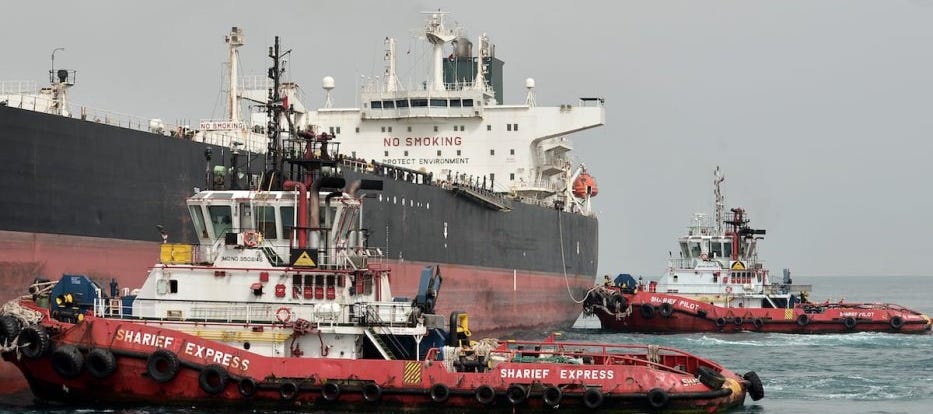
That permission has now been withdrawn, not by Tehran but by the very escalation the United States engineered. Beginning in early March 2026, major P&I Clubs issued cancellation notices for war-risk coverage in the Persian Gulf and Iranian waters. Effective March 5 after standard 72-hour warnings, Gard, Skuld, NorthStandard, the London P&I Club, the American Club, and Japan P&I Club pulled protection. The result: commercial tanker traffic through the Strait of Hormuz collapsed, hundreds of vessels were stranded, and war-risk premiums for any remaining coverage soared to unprecedented levels.
The immediate outcome was not the strangulation of Iranian oil exports but their quiet migration into a parallel, non-Western insurance ecosystem. Iran has continued shipping at least 11.7 million barrels to China since the conflict intensified, much of it via the very chokepoint it threatens to close. These cargoes increasingly travel on the “dark fleet”—older tankers with opaque ownership, AIS turned off, ship-to-ship transfers at sea, and insurance certificates issued in Moscow, Mumbai, or Shanghai. Western regulators have minimal visibility and almost no leverage over these networks.
It’s the Great Insurance Schism. To blunt the physical-market shock, the International Energy Agency authorized its largest-ever emergency stock release—400 million barrels—on March 11, 2026. The move provided temporary breathing room but could not repair the fracture in the financial plumbing that underpins global energy flows.
The Paradox of Deterrence
The strikes were sold as a textbook display of “peace through strength”: raise costs for the adversary until compliance follows. Yet in the energy domain the doctrine has backfired spectacularly. By making the formal insurance market prohibitively expensive and unreliable, the United States has effectively subsidized the shadow alternative. Discounted Iranian crude continues to reach buyers, primarily China, because Western coverage has all but evaporated. The price spread between “legal” and “sanctioned” oil has narrowed precisely because formal channels have become so risky. Buyers who once paid a heavy sanction premium now face a smaller one. Ship owners and insurers in Asia and Russia capture growing market share. Tehran secures hard currency to sustain its war machine and regional proxies.
This is why “total victory” claims collapse under scrutiny in a multipolar financial world. In the unipolar 1990s and early 2000s, U.S. military action could be paired with near-total financial dominance. Sanctions bit because there were few viable alternatives to the dollar system, London insurance, and Western clearing banks. That monopoly has eroded. China absorbs 80–90 percent of Iran’s oil exports and has built sophisticated evasion infrastructure. Russia has refined shadow-fleet logistics over a decade of its own isolation. India and Turkey facilitate rerouting with minimal fanfare. BRICS+ mechanisms enable incremental experiments with local-currency settlement and alternative clearing. The dollar remains dominant but is no longer indispensable.
Sure, military strikes can obliterate bunkers; they cannot, however, obliterate the growing web of non-Western financial plumbing that now carries energy across the planet. The shadow loop is self-reinforcing: as Western insurers retreat, premiums for compliant shipping rise, making shadow routes comparatively more attractive. Tehran gains resilience. The U.S. Navy can dominate the physical strait, but it cannot dominate the balance sheets in Shanghai or the digital ledgers in Moscow. Power has fragmented. What registers as decisive leadership in Washington registers as strategic self-sabotage in Beijing, New Delhi, and Ankara.
The Siege of the Consumer
The Energy Paradox has arrived at American gas pumps. This alone should strike fear in the heart of every GOP candidate running in the ‘26 mid-terms. While the administration neutralized military threats on Kharg Island, the resulting risk premium has injected volatility into every household budget. The EIA’s March 2026 Short-Term Energy Outlook shows Brent crude rising sharply and remaining elevated above $95 per barrel in the near term, with U.S. gasoline prices pushed higher as refining and retail margins lag. Consumers are told they are winning a war against a “totally defeated” enemy, yet they are paying for that victory with eroded economic predictability and sustained higher costs that will outlast any temporary ceasefire.
What Kharg implies
The Kharg Island strikes may play as bold leadership in the 24-hour news cycle, but for the global economy, they represent an acceleration toward a world in which America can no longer unilaterally dictate the terms of trade. The Great Insurance Schism is not a fleeting wartime anomaly; it is the emergence of a fragmented maritime order. The oceans are increasingly divided into “insured” and “shadow” zones. Waters the U.S. Navy patrols but whose financial lifeblood now flows through channels beyond its reach.
In a multipolar financial world, military victory without financial follow-through is incomplete at best and counterproductive at worst. The United States retains overwhelming kinetic power at sea and in the air. What it has lost is the assumption that such power automatically restores the old architecture of trust and control. That architecture is being rebuilt elsewhere. By necessity, by design, and by the very pressure Washington has applied. Until American strategy confronts the reality that bombs cannot repair a financial system it is inadvertently breaking, the cycle of “total victories” will deliver tactical triumphs and strategic defeats.
The war with Iran was never going to end with a single decisive blow on an oil terminal, because the real battlefield has shifted from the sea to the balance sheet. In that new terrain, the old rules of hegemony no longer hold. The Energy Paradox is a wartime distortion. It is also the emerging new normal of a multipolar age.