

The Narrative Gap: How Local Governance Fractured National Partisan Loyalty in 2026
Two shocking 2026 upsets reveal voters rejecting expensive partisan theater to demand tangible local governance.

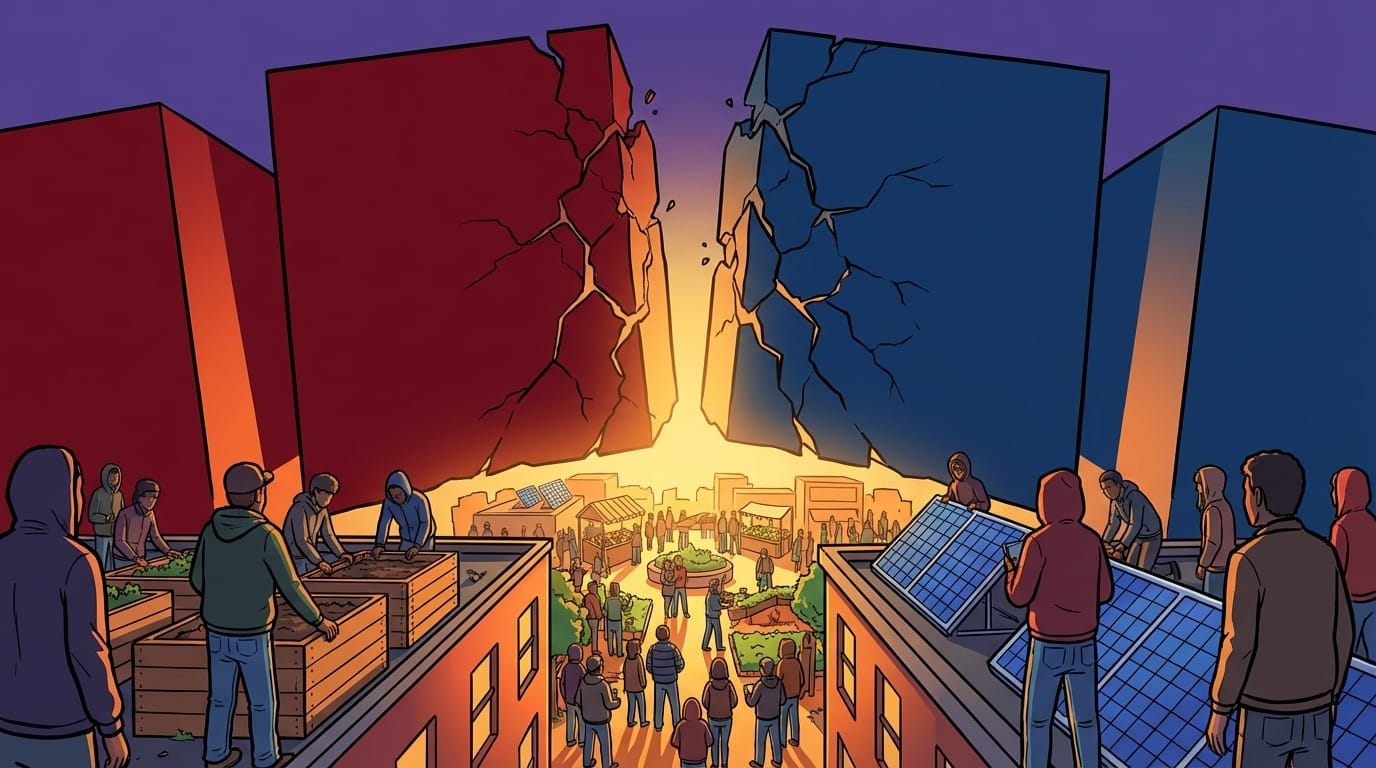
In the span of seven days, two political earthquakes rattled the American landscape. In Florida’s 87th District—the backyard of Mar-a-Lago—Democrat Emily Gregory secured a narrow victory that ended four decades of Republican control. Simultaneously, in North Carolina, Senate President pro tempore Phil Berger, a 20-year incumbent and the state’s most powerful legislator, fell to political newcomer Sam Page by a mere 23 votes after a protracted recount. These results, emerging from opposite ends of the political spectrum, share a common DNA: a decisive rejection of national partisan performance in favor of authentic, localized governance.
The data tells a remarkable story. In HD-87, Trump carried the district by 11 percentage points in 2024, and former Republican state representative Mike Caruso won by 19 points in 2022. Yet Gregory captured 51.15% of the vote. In North Carolina, Berger outspent Page by a 50-to-1 ratio—$2.27 million versus $51,000—and still lost. The outcomes defy conventional political wisdom and signal a fundamental realignment. Voters are no longer rewarding national endorsements or establishment machinery; they are demanding candidates who address tangible daily concerns.
We’re witnessing a “narrative gap”—an ever-widening chasm between Washington-centric partisan messaging and the gritty realities of local governance.
Meanwhile, the Republican Party is undergoing a behavioral “extinction burst.” As national politics fails to deliver tangible rewards, the party doubles down on increasingly extreme rhetoric, accelerating its own decline. The Democratic victories in 2026 special elections demonstrate a replicable strategy, but one that requires disciplined local focus to scale into November.
The Mar-a-Lago District Remakes Itself
On March 24, 2026, the Florida Department of State certified Emily Gregory’s 300-vote victory in House District 87, marking the first time a Democrat has represented the district since 1980. The upset carries profound symbolic weight: HD-87 includes Mar-a-Lago, Donald Trump’s private club and de facto Florida residence. The district, stretching from Boca Raton to Palm Beach, has long been a conservative stronghold. Trump won it by 11 points in 2024; Caruso, a Trump ally, won by 19 points in 2022. Gregory’s triumph thus represents more than a single seat change—it signals a shift in voter psychology.
The timing added urgency. The seat sat vacant for seven months after Republican representative Mike Caruso resigned in August 2025, leaving constituents without representation during critical insurance and affordability crises. Gregory sued Governor Ron DeSantis to compel a special election, arguing that the delay violated state law. The lawsuit, though unsuccessful in forcing an immediate election, framed the race as a referendum on governmental neglect.
The campaign crystallized a fundamental strategic divergence. Gregory centered her messaging on kitchen-table issues like skyrocketing Citizens Property Insurance premiums, unaffordable housing costs, and grossly underfunded schools. She avoided national Democratic branding, instead positioning herself as a business owner and local advocate who understood the district’s specific challenges. Her campaign literature featured photographs of damaged roofs from recent hurricanes and graphs illustrating insurance cost increases—actual problems that affect actual people.
Jon Maples, on the other hand, embraced the typical national Republican memes. He hammered on border security, criticized the Biden administration’s policies, and received high-profile visits from Trump himself. Maples framed the election as a referendum on federal issues, arguing that Gregory would align with “radical Democrats” in Washington.
Clearly, this approach backfired. Voter interviews revealed that many Republicans crossed party lines because they felt Maples was “talking about things that don’t affect my daily life” while Gregory addressed immediate financial pain. One lifelong Republican, a small business owner from Boca Raton, stated: “I’m struggling with my insurance bill. I don’t care about critical race theory right now.”
Trump’s involvement proved particularly toxic. The former president’s March 15 rally in Palm Beach drew thousands of supporters but appeared to mobilize Democratic turnout as much as Republican enthusiasm. Maples later blamed “national Democrat money” for his loss, but the data suggests deeper problems: the Republican candidate’s association with Tallahassee politicos alienated voters seeking local accountability
Despite the Democratic Congressional Campaign Committee’s $2 million investment, Gregory’s success stemmed more from grassroots organization than big-dollar spending (Reuters, 2026). Her campaign activated a network of local volunteers—many of whom had never worked on a political race before—who knocked on doors across the district’s sprawling suburban neighborhoods. The effort emphasized personal conversations about insurance claims and school capacity issues, creating a sense of urgency that national Republican machinery could not match.
Maples, reliant on outside support, appeared disconnected. His campaign headquarters were located in Tallahassee rather than the district, and surrogates from Washington dominated his public events. The result demonstrates that in suburban swing districts, authenticity and local presence outweigh national party resources. Gregory’s victory margin—just over 300 votes—underscores that the race turned on voter-to-voter contact at the precinct level, not television advertising blitzes.
In North Carolina, The Old Guard Falls
Three days before Florida’s special election, North Carolina experienced its own political earthquake. Phil Berger, Senate President pro tempore and one of the state’s most powerful legislators for two decades, lost his Republican primary to Sam Page by 23 votes after a mandatory recount. The margin—23 votes out of 26,000 cast—was narrow, but the implications are vast. Berger, who helped shape North Carolina policy for a generation, became the latest establishment casualty in a wave of anti-incumbent sentiment that has swept GOP primaries across the South.
Berger’s loss is among the most shocking upsets in recent Southern political history. Page’s campaign was almost entirely volunteer-driven, fueled by local discontent rather than institutional support. Berger’s team failed to recognize the depth of grassroots anger until it was too late, assuming his name recognition and war chest would secure an easy victory.
The catalyst for Berger’s downfall was hyper-local: opposition to a proposed casino in Rockingham County. Berger had initially supported (and received dark money from) the casino project, which promised jobs and tax revenue, but later equivocated under pressure from competing interests. Page seized on the issue, framing Berger as a backroom deal-maker who ignored constituent wishes. In a district where economic development is paramount, Berger’s perceived inconsistency became a fatal vulnerability.
The casino fight mobilized voters who typically ignored primary elections. Evangelical conservatives concerned about gambling’s social impact joined with libertarians opposed to corporate welfare, creating an unlikely coalition. Page positioned himself as a true conservative, echoing the anti-establishment rhetoric that defined Donald Trump’s 2016 campaign. But unlike Trump, Page was a genuine local—he lived in the district, ran his business there, and understood its specific economic anxieties.
Berger’s collapse mirrors Maples’ failure in crucial respects. Both were establishment candidates tied to party leadership; both relied on national endorsements and significant spending advantages; both underestimated local grievances. The Guardian observed that “the old guard” of institutional conservatism is “being actively dismantled from within by its own base.” The London School of Economics identified a pattern: voters are punishing candidates perceived as prioritizing party loyalty over district service.
Trump’s role in both cases highlights the paradox of national influence. In North Carolina, Trump endorsed Berger but also praised Page’s “great spirit,” splitting loyalties and confusing voters. In Florida, Trump’s personal rally energized Democrats more than it motivated Republicans, turning the district bluer despite his 2024 margin. Endorsements that once seemed decisive now appear toxic when perceived as top-down interventions. The behavioral dynamic is clear: as voters withdraw trust from national political performance, they recoil against symbols of that system—even when those symbols claim to support them.
The Narrative Gap: When National Politics Fail Locally
There is a widening gulf between Washington and local issues. Across both races in FL and NC, voters rejected candidates who spoke the language of national politics—border security, culture wars, partisan loyalty—in favor of those addressing concrete problems: insurance costs, school capacity, and economics. Christopher Cooper’s analysis attributes this to a fundamental mismatch. Partisan branding assumes voters prioritize ideological purity, but in 2026, voters prioritize immediate quality-of-life concerns.
Brookings Institution data reveals a broader trend: Democrats overperformed by an average of 17 points in 2025 special elections nationwide. This overperformance stems not from changing demographics but from a strategic shift. Democratic candidates who avoided national branding and focused on local issues consistently beat expectations, even in districts Trump carried. The Narrative Gap explains why: voters are exhausted by performative national loyalty and reward authenticity.
Behavioral psychology provides a powerful lens for why this may be happening. When an organism is discouraged from a previously rewarded behavior, it initially intensifies that behavior before adapting—a phenomenon called an “extinction burst.” You’ve seen this with two-year old children. When you ignore the child, they paradoxically misbehave worse for a period of time before finally quieting down. Republicans are no different. The Republican party is thrashing around like a toddler throwing a tempter tantrum.
Rather than adapting and moderating, the Republican party has escalated culture-war rhetoric, election denialism, and inflammatory national messaging. This surge represents the extinction burst of an outdated political model espousing unrewarded values. As national failings multiply—from unfulfilled border promises to culture-war overreach—the party doubles down on the very strategies driving voters away. The party’s inability to pivot to local issues—to discuss insurance premiums rather than border walls—ensures continued suburban losses.
Precinct-level analysis confirms the Narrative Gap. In HD-87, neighborhoods that voted for Trump in 2024 showed increased Democratic turnout in 2026, particularly in Boca Raton and Wellington suburbs. These precincts—affluent, educated, historically Republican—turned on Maples’ national messaging. The Palm Beach County Supervisor of Elections reported that overall turnout exceeded expectations in areas with high insurance premiums, while lower-turnout precincts correlated with strong Trump support in 2024 but weak local GOP organization in 2026.
In Rockingham County, NC, Page’s victory came from consolidating anti-casino sentiment across party lines. The Assembly NC’s precinct review shows Page won several traditionally Democratic precincts that supported Trump in 2024, suggesting local issue alignment can override national partisan loyalty. This pattern—crossover voting driven by hyper-local concerns—defines the Narrative Gap. Voters distinguish between national political branding and candidate competence on specific issues; when the gap widens, the brand becomes a liability.
Successful Tactics: Localization and Legal Pressure
Gregory’s campaign proved that disciplined localization beats national resources. She avoided mentions of Biden, Pelosi, or national Democratic agendas. Instead, she focused on three issues: property insurance reform, affordable housing development, and school funding equity (Reuters analysis, 2026). Her legal strategy—suing to force the special election—kept the vacancy in the headlines and framed Republicans as obstructing representation. The suit, though ultimately unsuccessful in court, generated press coverage that highlighted Democratic concern for district needs versus Republican neglect (AP News, 2026).
Page’s campaign employed similar discipline. He never made the race about national politics; he kept it about the casino, Berger’s backtracking, and local economic control. The Democratic Legislative Campaign Committee’s modest investment—nowhere near the DLCC’s $2 million HD-87 spend—proved unnecessary because the local issue provided organic momentum. Both cases demonstrate that in 2026, authenticity trumps advertising. Voters respond to candidates who demonstrate understanding of their specific problems.
The Democratic strategy offers a replicable template for the 2026 midterms. WUSF analysis suggests that Democrats should target suburban districts similar to HD-87, where local issues can override Trump’s residual popularity. The key is avoiding national Democratic branding; candidates must distance themselves from Washington while leveraging local networks. Brookings cautions that special elections have unique dynamics—low turnout, focused messaging—but the consistent overperformance across multiple states suggests a broader shift.
The strategy requires institutionalizing the local-first approach—training candidates to resist national party talking points, funding grassroots field operations over television ads, and developing issue playbooks tailored to each district’s economic profile. The 17-point average overperformance in 2025 special elections provides a baseline. Replicating it requires disciplined execution, not just opportunistic messaging.
Over-interpretation remains a risk. Special elections attract disproportionate media attention and can inflate expectations. Complacency could prove fatal. The 300-vote margin in HD-87 shows how fragile these flips are. Democrats must maintain the grassroots networks that delivered victory while scaling to hundreds of districts.
The most dangerous temptation is to nationalize the rhetoric of local victories. If successful candidates become spokespeople for Washington agendas, they will lose their local authenticity. The party must resist the urge to centralize messaging and instead empower local candidates to tailor their narratives. The Narrative Gap works both ways: voters punish candidates who appear to be reading from national scripts.
The Inevitable Adaptation
The March 2026 special elections mark a critical juncture in American politics. Voters are adapting to the failure of national political theater, seeking candidates who address concrete problems rather than symbolic loyalties. The Democratic victories in HD-87 and the Berger primary are not isolated incidents but symptoms of a broader realignment. The electorate is recalibrating around governance, not partisanship.
Voters have learned that national partisan loyalty delivers diminishing returns—insurance premiums keep rising, schools remain underfunded, local economies stagnate. The response is not ideological conversion but pragmatic switching. Republicans who voted for Gregory did not become Democrats; they became pragmatists. That distinction is crucial: the party that masters local governance, not national spectacle, will dominate the next political cycle.
The Republican Party’s current trajectory reflects a final act of defiance: frantic, extreme, and ultimately self-defeating. As behavioral psychology predicts, the extinction burst only intensifies before adaptation occurs. The surge in culture-war legislation, election denialism, and inflammatory rhetoric represents a party doubling down on a losing strategy. These erratic, extreme behaviors are not signs of strength but of systemic distress. Their inability to pivot to local issues ensures continued suburban losses.
The Road Ahead
The November 2026 midterms will test whether Democratic success in special elections translates to a wave. The Narrative Gap suggests significant Republican vulnerabilities in suburban districts across the country. However, special election mechanics—low turnout, intense media coverage—do not directly transfer. Democrats must build field operations, candidate pipelines, and local fundraising networks that sustain a national campaign without sacrificing the authenticity that won them HD-87.
The ultimate test will be whether either party can close the Narrative Gap. Republicans must abandon national spectacle for local substance; Democrats must avoid becoming the new establishment. The electorate’s impatience with performance politics means both parties face pressure to deliver tangible results. The March 2026 results indicate that voters will reward authenticity and punish theater. The party that internalizes that lesson—and adapts before its opponents—will define the next era of American politics.
The extinction burst is underway. The adaptation has just begun.
The Brewster Take
The Narrative Gap is a defining political problem in 2026, and it will determine November’s outcome. Republicans are trapped in a behavioral feedback loop. Their core voters respond to culture-war escalation, so the party amplifies that messaging—but in doing so, it alienates suburban swing voters who decide House majorities. The party cannot pivot because its identity is fused with national spectacle; every move toward local issues appears as betrayal to its base. This is the final act of a movement exhausting its options.
Democrats have discovered a winning formula but face a different trap: success. The temptation to nationalize victories—to declare a “mandate” or adopt Washington-style messaging—will be strong like it has in the past. Democrats historically only win after losing. If they fall into this same trap, they will recreate the very Narrative Gap they exploited. Their advantage is not ideological but methodological: local focus beats national branding, authenticity beats spectacle, substance beats symbolism.
The party that masters governance-as-branding wins. The party stuck in spectacle loses. The only question is who learns the lesson before November.