

The Saboteur’s Final Request: Willem Arondéus and the Defiance of Identity
The Gay Resistance Hero Who Blew Up the Nazi Archive to Save a Nation and a Legacy.

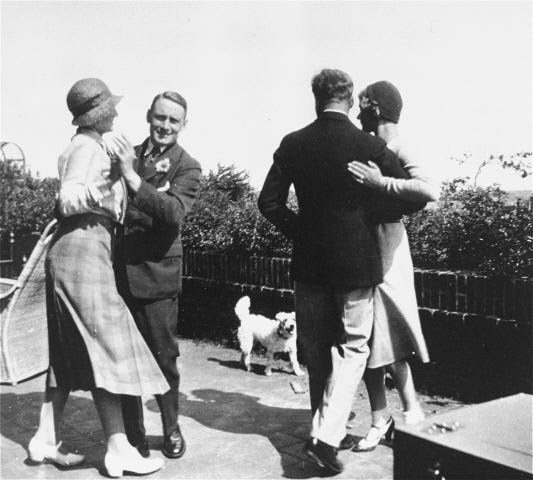
AMSTERDAM, 1943. In the meticulous machinery of Nazi occupation, the deadliest tool was not a rifle but a filing cabinet. By early 1943, the Amsterdam Population Registry at Plantage Kerklaan 36 had become a high-precision death engine. Its drawers held duplicate identity cards for every Dutch citizen—names, addresses, birthdates, religions—cross-referenced against the forged papers the Resistance was frantically producing to shield Jews and political fugitives. A single mismatch meant arrest, deportation, or worse.
Willem Arondéus understood filing cabinets all too well. Born in 1894 in Naarden as the youngest of six children to a fuel trader father and a mother from a theatrical family, he had lived openly as a gay man in a society that tolerated artistic eccentricity but punished personal truth. He trained as a painter and illustrator, landing commissions like a large mural for Rotterdam City Hall in 1923. Later he turned to writing, novels such as Het Uilenhuis (1938) and a biography of the painter Matthijs Maris, yet success always hovered just out of reach. He scraped by in bohemian poverty, his sexuality an open secret that kept him on society’s edges.
When the Germans invaded the Netherlands in May 1940 and the country fell in five days, Arondéus chose not to hide. He joined the underground, first producing the clandestine newsletter Brandarisbrief, then merging it with the artists’ resistance paper De Vrije Kunstenaar. There he met sculptor Gerrit van der Veen, a master forger of identity cards, and the lesbian cellist and conductor Frieda Belinfante. Together they realized the fatal flaw in their work: no forgery could survive scrutiny if the original records still existed.
The solution they conceived was audacious. An architectural and bureaucratic assassination. On the night of March 27, 1943, a team led by Arondéus and van der Veen, with Belinfante deeply involved in the planning, struck. Disguised in police uniforms sewn by group member Sjoerd Bakker, they approached the night guards claiming to search for explosives. Two medical students in the group, Cees Honig and Willem Beck, injected the guards with phenobarbital, rendering them unconscious and carrying them safely to the nearby Artis zoo. Inside the vault, the saboteurs opened drawers, piled thousands of cards on the floor, doused them in benzene, and set timed explosives stolen from a munitions depot. They escaped before the blast.
The fire that followed was no accident. Sympathetic Dutch firefighters, tipped off in advance, deliberately delayed their response and then hosed the building with water instead of foam, ruining far more paper than flames alone could have. When the smoke cleared, approximately 800,000 identity cards, roughly 15 percent of the entire registry, were destroyed. Six hundred blank cards and 50,000 guilders were spirited away for future forgeries. No one was killed in the attack. Thousands of Jews and others gained precious months (or years) of anonymity.
The action was a tactical triumph. But betrayal arrived swiftly. Within days, a traitor (never conclusively identified) pocketed a 10,000-guilder Nazi reward. Arondéus was arrested on April 1 after a notebook in his apartment revealed names. He refused to talk, even under interrogation. Most of the group were rounded up. Belinfante escaped by disguising herself as a man, eventually fleeing on foot across the Alps to Switzerland and, later, to the United States.
On June 18, 1943, Arondéus and thirteen others stood trial at the Tropenmuseum. He pleaded guilty and took full responsibility, possibly sparing two younger doctors from execution. Twelve men, including Arondéus, were sentenced to death. In the final days before the firing squad in Haarlem, he composed his last message, not to his family, not to the Resistance, but to history.
Speaking to his lawyer (or a friend, accounts vary; one source names attorney Lau Mazirel), he said: “Tell people that homosexuals are not cowards.” In Dutch: “Zeg de mensen dat homoseksuelen niet per definitie zwakkelingen zijn.” He wanted the world to know that he and at least two other executed men—Sjoerd Bakker and Johan Brouwer—were gay.
The execution came on July 1, 1943 (some records list July 2). Arondéus was 48. He had destroyed a Nazi filing system to save strangers. With his final sentence, he addressed something more stubborn: the quiet assumption, shared by many of his own countrymen and even some fellow resisters, that a gay man was inherently soft, weak, or cowardly. Unfit for the “manly” work of sabotage and sacrifice.
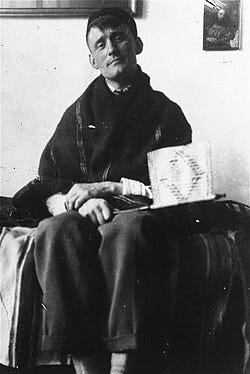
For decades, the Netherlands honored only half of his legacy. Immediately after the war, his family received a posthumous medal. In 1946 a plaque appeared at the ruined registry site. But the “tell the people” bit was quietly sidelined. Textbooks and early resistance histories celebrated the artist-hero while airbrushing his sexuality. Homosexuality remained criminalized in much of Europe; the idea that a gay man could lead one of the most daring operations of the Dutch underground did not fit the postwar narrative of stoic, conventional masculinity. Arondéus became a straight-washed icon. Brave, sure, but conveniently neutered.
Correction arrived slowly. In 1984 Arondéus was awarded the Resistance Memorial Cross. On June 19, 1986, Yad Vashem in Israel recognized him as Righteous Among the Nations. Only then did Dutch historians and the public begin to reckon fully with the defiant coda he had dictated from his cell. A 2023 documentary, Willem & Frieda: Defying the Nazis (hosted by Stephen Fry), finally brought both Arondéus and Belinfante’s intertwined stories to international audiences.
Today the story reads like a parable about the politics of the archive itself. The Nazis built a registry to categorize and exterminate. Postwar society built a different archive. One that filed heroes into comfortable, heterosexual boxes. Arondéus refused both. He burned the first with explosives and the second with his dying words. His sabotage was double: against the occupier who wanted to erase Jewish lives and against the prejudice that wanted to erase his own.
In an era when debates over identity politics, military service, and national sacrifice still rage. When marginalized communities are still asked to prove their loyalty, their courage, their right to belong, Arondéus’s final request lands with breathtaking force. He did not ask to be tolerated. He demanded recognition on his own terms: that homosexuals are not cowards and that the most excluded often fight the hardest precisely because their right to exist is never granted, only seized.
The population registry bombing bought time for thousands. But Arondéus’s last sentence represents something rare by itself: the slow, eventual acknowledgment that heroism has no sexual orientation prerequisite. He sabotaged invisibility itself. And in the end, that may have been an even more explosive act.